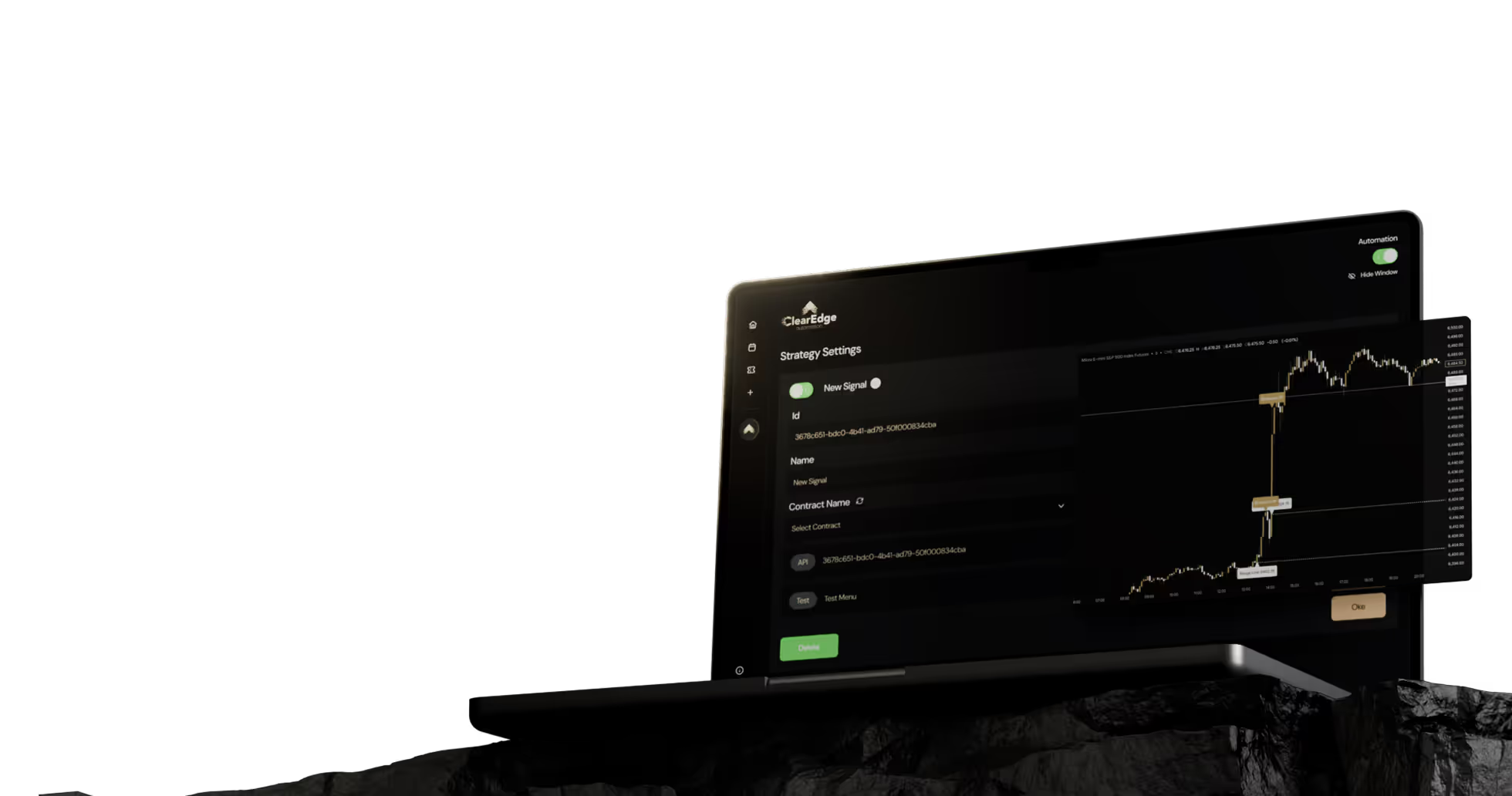
Best No-Code Futures Automation Platform For Beginners In 2026
Stop manually entering trades. Find the best beginner futures automation platforms for 2026 featuring no-code setups, paper trading, and built-in risk controls.


The best futures automation platform for beginners in 2026 prioritizes ease of use, no-code setup, paper trading, and clear learning resources. Beginners should look for platforms that connect to TradingView without requiring programming, offer simulated trading environments, and include built-in risk controls. The right starter platform reduces the learning curve so new traders can focus on strategy development rather than technical configuration.
Key Takeaways
- No-code platforms let beginners automate TradingView strategies without writing a single line of code
- Paper trading support is non-negotiable for beginners — test every strategy in simulation before risking real capital
- Built-in risk controls like daily loss limits and max position sizes protect new traders from costly mistakes
- Broker integration matters — confirm your preferred broker works with the platform before committing
- Expect a 2-4 week learning curve for most beginner-friendly platforms, longer for platforms requiring coding
Table of Contents
- What Makes a Futures Automation Platform Beginner-Friendly?
- Which Features Do Beginners Actually Need?
- No-Code vs. Coded Platforms: Where Should Beginners Start?
- Why Paper Trading Should Be Your First Step
- How to Evaluate a Platform's Learning Curve
- Beginner Platform Comparison: What to Look For
- Common Mistakes Beginners Make Choosing a Platform
- Frequently Asked Questions
- Conclusion
What Makes a Futures Automation Platform Beginner-Friendly?
A beginner-friendly futures automation platform removes technical barriers between your trading idea and live execution. That means no programming requirements, clear documentation, and a setup process that doesn't assume you already know what a webhook is. The best platforms for new traders in 2026 let you go from a TradingView alert to an automated trade in under an hour, not days.
Here's what separates beginner platforms from advanced ones: simplicity in the right places. You still need robust risk management features, reliable execution, and solid broker integration. But the interface should guide you through setup rather than handing you an API reference manual and wishing you luck.
No-Code Automation: Software that lets you create automated trading rules using visual interfaces, dropdowns, and pre-built templates instead of writing programming code. This is the fastest path for beginners to start automating futures strategies.
Three factors matter most when evaluating ease of use: how long it takes to place your first automated paper trade, how much documentation exists for new users, and whether customer support actually responds when you get stuck. A platform with powerful features but terrible onboarding is not a beginner platform.
Which Features Do Beginners Actually Need?
Beginners need five core features: no-code strategy setup, paper trading, daily loss limits, broker connectivity with their preferred broker, and responsive customer support. Everything else is nice to have but not required on day one.
It's tempting to chase the platform with the longest feature list. Resist that. A platform with 50 features you don't understand is worse than one with 10 features you can actually use. Start with what matters:
- TradingView webhook integration — Most beginners already use TradingView for charting. A platform that connects directly to your TradingView alerts removes an entire layer of complexity.
- Paper trading mode — You need to test strategies without risking money. Period. If a platform doesn't offer simulated trading, walk away.
- Daily loss limits — Automated systems can lose money fast if something goes wrong. A hard daily loss cap protects your account while you learn.
- Position sizing controls — Start with one contract. Platforms that let you set maximum position sizes prevent accidental over-leveraging.
- Clear setup documentation — Video tutorials, step-by-step guides, and a searchable knowledge base save hours of frustration.
Webhook: A URL endpoint that receives data from TradingView when an alert fires. The automation platform listens at this URL and converts incoming alert data into broker orders. Think of it as the bridge between your chart and your broker.
Features like multi-account management, advanced order types, and custom strategy scripting become relevant later. For your first 90 days, focus on getting one simple strategy running reliably in paper trading. That alone teaches you more than reading about features you won't use yet. For a deeper look at what to evaluate, the futures automation platform comparison breaks down features across platforms.
No-Code vs. Coded Platforms: Where Should Beginners Start?
Beginners should start with a no-code trading platform. Coded platforms offer more flexibility, but that flexibility comes with weeks or months of learning programming before you can place a single automated trade.
Here's the practical difference. With a no-code platform like ClearEdge Trading, you set up your TradingView strategy, configure a webhook, and the platform handles execution. Average setup time for a first strategy is measured in minutes to hours. With a coded platform, you write Python or C# scripts, handle API authentication, manage error handling, and debug execution logic. That process takes most beginners weeks.
FactorNo-Code PlatformCoded PlatformTime to first trade30 minutes to 2 hours2-6 weeksProgramming requiredNonePython, C#, or similarCustomization ceilingModerateVery highDebugging difficultyLowHighCost to start$20-150/month typicalFree tools exist, but time cost is highBest forBeginners, traders with existing TradingView strategiesDevelopers, traders needing custom execution logic
That doesn't mean no-code platforms are limited. Many support conditional logic, multiple order types, bracket orders, and risk parameters. For a detailed comparison, see our guide on no-code vs. coded futures trading platforms. The honest answer: most retail futures traders never outgrow a good no-code platform.
Why Paper Trading Should Be Your First Step
Paper trading lets you validate your automation setup, test your strategy logic, and build confidence without financial risk. Every beginner should spend a minimum of 2-4 weeks in simulation before switching to live execution.
This isn't optional advice. It's a risk management requirement. When you first automate a strategy, things will go wrong. Alerts might fire at unexpected times. Position sizing might not match what you expected. Your stop loss might sit at the wrong level because of a configuration error. Better to discover these problems with simulated money.
Paper Trading: Simulated trading using real-time market data but no actual money. Orders are "filled" virtually, letting you see how your strategy would perform without financial exposure. Also called sim trading or demo trading.
What to look for in a platform's paper trading features:
- Real-time data feeds (not delayed quotes)
- Realistic fill simulation that accounts for slippage
- Identical interface to live trading (so the transition is seamless)
- Performance reporting that tracks win rate, drawdown, and P&L
Some platforms offer limited paper trading. Others, like ClearEdge Trading, let you run full strategy automation in simulation mode with the same webhook and alert setup you'll use live. The paper trading features guide covers what to test during your simulation phase. When you're ready to look at supported brokers for live trading, check the broker integration page.
How to Evaluate a Platform's Learning Curve
The best way to evaluate a platform's learning curve is to try it. Most beginner-friendly platforms offer free trials or paper trading accounts. Use those. If you can't set up a basic automated paper trade within your first session, the platform may not be the right fit for your current skill level.
Here's a practical test. Give yourself two hours with a new platform. In that time, try to:
- Create an account and navigate the dashboard
- Connect a TradingView alert via webhook
- Configure a simple entry rule (e.g., buy one MES contract when your alert fires)
- Set a stop loss and take profit
- Execute the trade in paper trading mode
If you complete all five steps in two hours, the platform's learning curve is manageable. If you're stuck on step two after an hour, either the documentation is poor or the platform targets more advanced users.
Other signals that indicate a beginner-friendly learning curve:
- Guided onboarding walkthrough on first login
- Video tutorials under 10 minutes covering common tasks
- Template strategies you can modify rather than build from scratch
- Active community forum or Discord where you can ask questions
- Customer support response time under 24 hours
For a deeper analysis of what to expect during onboarding, see the automation platform learning curve guide.
Beginner Platform Comparison: What to Look For
When comparing the best futures automation platforms for beginners in 2026, focus your platform evaluation on five dimensions: ease of setup, risk controls, broker support, pricing, and support quality. Features you can't use yet don't matter.
Evaluation CriteriaWhat Beginners Should Look ForRed FlagsSetup complexityWebhook-based, no coding, under 1 hour to first paper tradeRequires API key setup, coding, or server configurationRisk controlsDaily loss limits, max position size, kill switchNo built-in risk parametersBroker integrationSupports your broker, 20+ options availableLimited to one or two brokersPricing plansMonthly plans under $100, no long-term lock-inAnnual commitment required, no free trialCustomer supportLive chat or email with under 24-hour responseForum-only support, no direct contactPaper tradingFull simulation mode with real-time dataNo paper trading, or delayed data onlyUptime/reliability99.9%+ uptime, cloud-based infrastructureFrequent outages, desktop-only (requires your PC running)Mobile monitoringMobile alerts or app for checking positionsNo mobile access at all
Pricing deserves special attention. Some platforms charge per trade, others charge flat monthly fees. For beginners who trade less frequently, a flat monthly fee is usually more predictable. The platform pricing models guide breaks down common pricing structures. You can also check ClearEdge Trading's pricing for an example of transparent plan structures.
One thing beginners often overlook: execution speed. Even for beginners, execution speed matters because slow fills mean more slippage. Look for platforms with latency under 100ms. ClearEdge Trading, for example, runs 3-40ms depending on broker connection. During fast-moving markets like FOMC announcements at 2:00 PM ET or NFP releases at 8:30 AM ET, that speed difference translates directly to fill quality.
Common Mistakes Beginners Make Choosing a Platform
The most common mistake is choosing a platform based on features you think you'll need someday instead of features you need today. Here are four mistakes to avoid:
1. Skipping paper trading entirely. Some beginners get excited and go straight to live trading. This almost always leads to preventable losses from configuration errors. Spend at least two weeks in simulation. The TradingView paper trading guide walks through how to set this up properly.
2. Choosing the cheapest option. Free or ultra-cheap platforms often lack customer support and risk controls. When something goes wrong at 9:31 AM on a volatile Monday, you want someone to answer your support ticket. A platform that costs $50-100/month but includes reliable support and built-in daily loss limits is worth the difference.
3. Not testing broker compatibility first. Confirm your broker works with the platform before you set everything up. Switching brokers mid-setup adds weeks of delays and paperwork.
4. Automating complex strategies too early. Start with one instrument (Micro E-mini S&P MES at $1.25/tick is popular for beginners), one direction, one simple entry rule, and one exit rule. Get that working perfectly before adding complexity. Our beginner automation guide outlines a good starting strategy framework.
Frequently Asked Questions
1. What is the best futures automation platform for beginners in 2026?
The best platform depends on your broker, budget, and whether you want no-code setup. Platforms like ClearEdge Trading offer no-code TradingView automation with paper trading and built-in risk controls, which covers the core needs most beginners have.
2. Do I need programming skills to automate futures trading?
No. No-code platforms let you automate TradingView alerts without writing any code. You build your strategy in TradingView using indicators and alerts, then the platform handles trade execution through webhooks.
3. How much does a futures automation platform cost for beginners?
Most beginner-friendly platforms charge $20-150 per month. Some offer free trials or paper-trading-only tiers. Avoid platforms requiring annual commitments until you've confirmed the platform fits your workflow.
4. How long does it take to learn a futures automation platform?
Beginner-friendly no-code platforms typically take 2-4 weeks to learn well enough for live trading. The first automated paper trade should be possible within 1-2 hours of initial setup.
5. Should I paper trade before going live with automation?
Yes, always. Paper trade for a minimum of 2-4 weeks to verify your alerts fire correctly, your position sizing is accurate, and your risk controls work as expected. This is the single most important step beginners skip.
6. What broker should beginners use with an automation platform?
Choose a broker that your automation platform supports and that offers competitive futures commissions. Popular options include AMP Futures, Tradovate, and TradeStation. Check your platform's broker integration page before opening an account.
Conclusion
The best futures automation platform for beginners in 2026 is one that gets out of your way. Look for no-code setup, reliable paper trading, built-in risk controls, and responsive support. Start simple with one instrument and one strategy in simulation, then move to live trading once you've validated your setup over 2-4 weeks.
Your next step: pick one platform, set up a paper trading account, and place your first automated simulated trade this week. That single action teaches more than weeks of research.
Ready to automate your futures trading? Explore ClearEdge Trading and see how no-code automation works with your TradingView strategies.
References
- CME Group - E-mini S&P 500 Contract Specifications
- CME Group - Introduction to Futures
- National Futures Association - Investor Resources
- TradingView - About Webhooks
- CFTC - Learn and Protect
Disclaimer: This article is for educational purposes only. It is not trading advice. ClearEdge Trading executes trades based on your rules; it does not provide signals or recommendations.
Risk Warning: Futures trading involves substantial risk. You could lose more than your initial investment. Past performance does not guarantee future results. Only trade with capital you can afford to lose.
CFTC RULE 4.41: Hypothetical results have limitations and do not represent actual trading.
By: ClearEdge Trading Team | About























































Steal the PlaybooksOther TradersDon’t Share
Every week, we break down real strategies from traders with 100+ years of combined experience, so you can skip the line and trade without emotion.