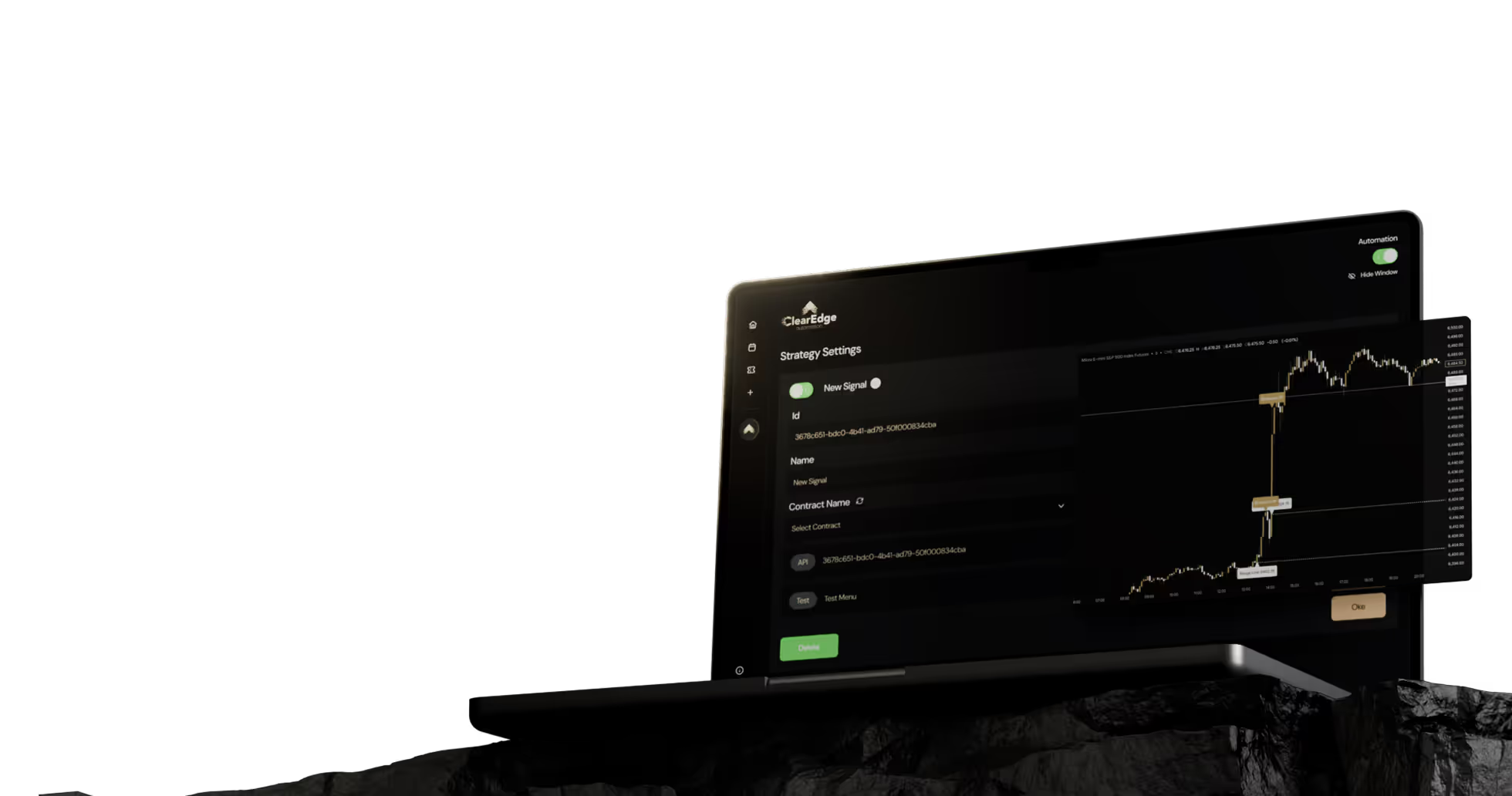
Benefits Of Browser-Based VPS Automated Trading For Futures Automation
Scale futures automation with a browser-based VPS. Access 99.9% uptime, zero software installs, and the freedom to manage TradingView alerts from any device.


Browser-based VPS automated trading lets you run futures automation without installing software, switching between devices freely, and relying on enterprise-grade uptime. You log in through any web browser, your strategies execute on remote servers, and your trades continue even if your laptop dies. For futures traders running TradingView alerts to brokers like Tradovate or NinjaTrader, this approach removes the setup friction of traditional trading VPS servers.
Key Takeaways
- Browser-based VPS automated trading requires no software install, you access your trading server through Chrome, Safari, Firefox, or any modern browser.
- Device flexibility means switching from desktop to laptop to phone without losing your trading session or reconfiguring connections.
- Reliability comes from data center infrastructure with 99.9% uptime, redundant power, and stable internet that exceeds typical home setups.
- Integrated browser-based platforms can replace third-party Windows or Linux VPS rentals that cost $30-$100 per month.
- Latency for browser-based futures trading VPS typically runs 3-40ms to broker APIs, fast enough for most retail automation strategies.
Table of Contents
- What Is Browser-Based VPS Automated Trading?
- Why No Software Install Matters
- How Device Flexibility Changes Your Workflow
- What Makes Browser-Based VPS Reliable?
- Browser-Based vs Traditional Trading VPS
- Common Mistakes To Avoid
- Frequently Asked Questions
What Is Browser-Based VPS Automated Trading?
Browser-based VPS automated trading runs your futures automation on a remote cloud server that you access through a web browser instead of remote desktop software. Your TradingView alerts, broker connections, and execution logic live in the cloud, not on your local machine. You log in from anywhere, check positions, adjust rules, and let the platform handle execution while you sleep, work, or travel.
Browser-Based VPS: A virtual private server accessed through a web interface rather than a remote desktop client. For futures traders, this means automated trade execution runs on hosted infrastructure without needing to install Windows VPS or Linux VPS software locally.
Traditional setups require renting a dedicated trading server, configuring Windows or Linux, installing your trading platform, then connecting via remote desktop. Browser-based vps automated trading benefits skip those steps. The infrastructure is already running, already connected to broker APIs, and already optimized for low latency vps execution. You bring your strategy, the platform brings the server.
Why Does No Software Install Matter For Futures Traders?
No software install means you can start automating trades within minutes instead of spending hours configuring a Windows VPS or Linux VPS environment. Traditional trading vps setups require downloading remote desktop clients, transferring files, installing trading platforms, configuring firewalls, and troubleshooting connection issues before you place a single automated trade.
For futures trading vps users running TradingView automation, the install-free approach removes several pain points:
- No Windows licensing fees bundled into your monthly VPS cost
- No platform compatibility issues when your local OS updates break your remote desktop trading connection
- No manual updates to trading software, broker plugins, or webhook handlers
- No IT troubleshooting when something stops working at 3 AM during overnight ES futures sessions
The integrated vps platform approach handles updates, broker API changes, and infrastructure maintenance on the backend. You focus on your strategy, not on whether your dedicated trading server can run the latest version of your charting software.
Integrated VPS Platform: A trading automation service where the cloud trading server is built into the platform itself, eliminating the need to rent and configure a separate third-party VPS. This is a third party vps replacement model that combines hosting and execution in one product.
How Device Flexibility Changes Your Trading Workflow
Device flexibility means you can monitor and adjust your automated futures trading from any device with a browser, without reinstalling software or reconfiguring connections. A trader who starts the day at a desktop, checks positions on a laptop during lunch, and reviews fills on a phone at dinner uses the same login throughout. Nothing transfers, nothing syncs, because everything lives in the cloud.
This matters more than it sounds. Traditional automated trading vps setups tie you to specific machines with specific remote desktop clients installed. If your home internet drops, you cannot quickly switch to a coffee shop laptop without recreating your entire connection. Browser-based access removes that constraint.
Practical scenarios where device flexibility pays off:
- Traveling for work and needing to verify your NQ futures automation paused before FOMC
- Stepping away from your desk during NFP and checking fills from your phone
- Switching between Mac at home and Windows at the office without dual-platform headaches
- Letting a trading partner review settings from their device without sharing remote desktop credentials
For prop firm traders managing multiple funded accounts, device flexibility also helps with compliance monitoring. Our prop firm automation guide covers how this flexibility supports rule adherence across evaluation and funded phases.
What Makes Browser-Based VPS Reliable Enough For Live Trading?
Browser-based VPS reliability comes from running on commercial data center infrastructure that targets 99.9% or higher uptime, redundant power systems, and multiple internet connections. Your home network probably averages 99% uptime at best, which sounds close but translates to roughly 87 hours of downtime per year compared to under 9 hours for a properly run cloud trading server.
VPS Uptime Requirements: The percentage of time a server stays online and reachable. For futures automation, 99.9% is the minimum acceptable threshold, with 99.95% or higher preferred for strategies that hold positions overnight or trade during high-impact events.
Reliability for automated futures trading depends on several layers:
- Hardware redundancy: backup servers take over if primary hardware fails
- Network redundancy: multiple ISP connections route around outages
- Power redundancy: battery backups and generators handle grid failures
- Geographic proximity: servers near CME Globex matching engines reduce latency
- Monitoring and alerts: issues get flagged and resolved before they affect your trades
For ES, NQ, GC, and CL traders, this reliability matters most during scheduled volatility. FOMC at 2:00 PM ET, NFP at 8:30 AM ET, and CPI releases create execution windows where a few seconds of downtime can mean missed entries or trapped positions. The futures instrument automation guide covers how reliability affects each major contract.
Latency expectations for browser-based platforms typically fall in the 3-40ms range to broker APIs, depending on broker location and your strategy's routing. That sits well within the speed tier most retail futures traders need. High-frequency arbitrage requires colocation; trend-following, breakout, and Opening Range strategies do not.
Browser-Based vs Traditional Trading VPS
Browser-based platforms differ from traditional VPS rentals in setup time, cost structure, and ongoing maintenance burden. The table below compares the two approaches across the dimensions that matter most for futures automation.
| Dimension | Browser-Based Platform | Traditional Trading VPS |
|---|---|---|
| Setup time | Minutes | 2-6 hours typical |
| Software install | None | OS, trading platform, plugins |
| Monthly cost | Bundled with platform | $30-$100 standalone VPS |
| Updates | Automatic | Manual, you handle them |
| Device access | Any browser | Remote desktop client per device |
| Uptime SLA | 99.9%+ typical | Varies by provider |
| Latency to broker | 3-40ms typical | 1-20ms with colocation |
| Best for | Retail automation, TradingView alerts | Custom-coded systems, HFT |
Cost optimization tilts toward browser-based for most retail futures traders. A standalone Windows VPS at $50/month plus a separate automation platform at $50/month runs $1,200 per year before broker commissions. An integrated browser-based service often costs less and removes the maintenance work entirely.
Traditional VPS still wins for traders running custom Python or C++ algorithmic systems that need root access, specific library versions, or colocation near exchange servers. For TradingView-based automation hitting broker webhooks, the third party vps replacement model usually performs equally well at lower total cost.
For a deeper look at platform tradeoffs, the futures automation platform comparison walks through evaluation criteria across pricing, broker support, and execution speed.
Common Mistakes To Avoid
Even with browser-based simplicity, traders make predictable mistakes that hurt performance:
- Skipping paper trading. The platform may be reliable, but your strategy still needs validation. Paper trade first to confirm your TradingView alerts trigger correctly and your position sizing matches expectations.
- Ignoring broker latency. Browser-based VPS speed tiers handle the platform side, but your broker's API responsiveness matters too. Test fill quality during market hours, not just overnight.
- Over-relying on mobile monitoring. Phone access is convenient, but adjusting risk parameters from a small screen during volatility leads to fat-finger errors. Use mobile for monitoring, desktop for changes.
- Forgetting about scheduled events. Reliable infrastructure does not protect you from poorly designed strategies that fire during FOMC or NFP without proper risk controls. Build event filters into your rules.
Frequently Asked Questions
1. Is browser-based VPS fast enough for futures scalping?
For most retail scalping strategies on ES, NQ, or MES futures, 3-40ms latency from a browser-based platform is sufficient. Sub-millisecond execution is only required for institutional latency arbitrage, not for typical Opening Range or breakout scalps.
2. Do I still need a separate Windows VPS if I use a browser-based platform?
Usually no, the browser-based platform replaces the need for a separate Windows VPS or Linux VPS rental. You only need a separate VPS if you run custom-coded algorithms outside the platform's supported workflow.
3. What happens to my trades if my internet drops at home?
Your automation continues running on the cloud server because execution does not depend on your local connection. You temporarily lose monitoring access until your internet returns, but trades fire based on your predefined rules regardless.
4. Can I access my browser-based trading VPS from a phone?
Yes, most browser-based platforms work on mobile browsers for monitoring positions and basic adjustments. For complex configuration changes, a desktop or laptop is recommended to reduce input errors.
5. How does cost compare to renting a dedicated trading server?
Browser-based platforms typically cost less than the combined price of a $30-$100 monthly VPS rental plus a separate automation tool. Bundled pricing also removes the hidden costs of OS licensing, software updates, and IT troubleshooting time.
6. Are browser-based platforms secure for live broker connections?
Reputable platforms use encrypted connections, secure API key storage, and isolated execution environments to protect broker credentials. Always verify the platform uses HTTPS, two-factor authentication, and never stores broker passwords in plain text.
Conclusion
Browser-based vps automated trading benefits include zero software install, full device flexibility, and data-center reliability that exceeds typical home setups. For most retail futures traders running TradingView alerts to brokers like Tradovate, AMP, or NinjaTrader, the integrated approach replaces the cost and complexity of standalone Windows or Linux VPS rentals.
Before going live, paper trade your strategy on the platform to validate execution, test mobile access during regular market hours, and confirm your risk controls behave correctly during scheduled events like FOMC and NFP.
Want to dig deeper? Read our complete guide to vps for automated futures trading for more detailed setup instructions and strategies.
References
- CME Group - E-mini S&P 500 Contract Specs
- CFTC - Trading Organization Oversight
- TradingView - Webhook Documentation
- ClearEdge - Algorithmic Trading VPS Requirements
- ClearEdge - VPS Requirements for Automated Futures Trading
Disclaimer: This article is for educational and informational purposes only. It does not constitute trading advice, investment advice, or any recommendation to buy or sell futures contracts. ClearEdge Trading is a software platform that executes trades based on your predefined rules, it does not provide trading signals, strategies, or personalized recommendations.
Risk Warning: Futures trading involves substantial risk of loss and is not suitable for all investors. You could lose more than your initial investment. Past performance does not guarantee future results. Only trade with capital you can afford to lose.
CFTC RULE 4.41: Hypothetical or simulated performance results have certain limitations. Unlike an actual performance record, simulated results do not represent actual trading.
By: ClearEdge Trading Team | 29+ Years CME Floor Trading Experience | About












































Steal the PlaybooksOther TradersDon’t Share
Every week, we break down real strategies from traders with 100+ years of combined experience, so you can skip the line and trade without emotion.