Cheapest Budget VPS For Automated Futures Trading Automation Guide
Stop losing trades to downtime. Compare cheap VPS for automated futures trading from $5 and find the best low-latency Chicago servers for your strategy.


The cheapest VPS for automated futures trading typically runs $10-25/month for entry-level plans from providers like Contabo, Hetzner, or ChicagoVPS, with budget options starting around $5-7/month. For futures automation, the cheapest viable VPS needs at least 2GB RAM, 2 CPU cores, SSD storage, and proximity to your broker's data center. Cutting too cheap risks downtime that costs more than the savings.
Key Takeaways
- Budget VPS plans start at $5-7/month, but reliable trading VPS pricing typically begins at $15-25/month with proper specs and uptime guarantees.
- Minimum specs for automated futures trading: 2GB RAM, 2 vCPU cores, 40GB SSD, Windows or Linux, 99.9% uptime SLA.
- Location matters more than price. A $20 VPS near Chicago's CME data center beats a $5 VPS three regions away.
- Free VPS options exist (AWS Free Tier, Oracle Cloud Always Free) but come with limitations that may not suit 24/7 futures automation.
- Hidden costs include Windows licensing fees, bandwidth overages, and backup add-ons that can double the advertised price.
Table of Contents
- What "Cheap" Actually Means for Trading VPS
- Minimum Specs for Automated Futures Trading
- Cheapest VPS Providers Ranked by Price
- Best Value Tier: Where Cheap Meets Reliable
- Are Free VPS Options Worth Considering?
- Hidden Costs That Inflate the Bill
- When You Don't Need a VPS at All
- Frequently Asked Questions
What "Cheap" Actually Means for Trading VPS
Cheap VPS for automated futures trading falls into three price tiers: ultra-budget ($3-7/month), entry-level ($10-25/month), and value-tier ($25-50/month). The cheapest option that actually works reliably for futures automation usually sits in the entry-level range, not the ultra-budget tier. Going too cheap often means oversold servers, no SLA, and downtime that costs you trades.
Trading VPS: A virtual private server rented from a hosting provider to run trading platforms, charts, and automation software 24/7 without depending on your home computer or internet connection. For futures traders, it keeps automated strategies running even when your local machine is off.
The price you pay reflects three things: hardware quality, network proximity to exchange data centers, and uptime guarantees. A $5 VPS in Singapore might run NinjaTrader fine for charting, but if your broker's matching engine sits in Aurora, Illinois, you're adding 200+ms of latency to every trade. That's not cheap, that's expensive in a different form.
What Are the Minimum Specs for a Trading VPS?
The minimum specs for automated futures trading are 2GB RAM, 2 vCPU cores, 40GB SSD storage, and a 99.9% uptime SLA. These specs handle one trading platform plus a browser for monitoring. If you run multiple charts, multiple platforms, or copy trading across accounts, double those numbers.
vCPU: A virtual CPU core allocated to your VPS from the host's physical processors. Two vCPUs is usually the floor for running TradingView desktop, NinjaTrader, or a webhook listener without lag.Use CaseRAMvCPUStorageOSWebhook listener only1-2GB1-220GB SSDLinuxSingle platform (NinjaTrader)4GB240GB SSDWindowsMulti-platform / copy trading8GB480GB SSDWindowsHeavy backtesting + live16GB4-6160GB SSDWindows
Linux VPS plans cost less because there's no Windows licensing fee. If your automation only needs to receive a webhook and forward an order via API, a $5-7/month Linux VPS handles it easily. If you need a Windows desktop to run NinjaTrader, TradeStation, or Sierra Chart, expect to pay $15-25/month minimum for the Windows license bundle.
Cheapest VPS Providers Ranked by Price
Below is a price ranking of common VPS providers used by futures traders, based on entry-tier pricing for plans meeting the 2GB/2vCPU minimum. Prices are approximate and change frequently, always verify current rates directly.
ProviderEntry Price (Linux)Entry Price (Windows)Trading-Friendly LocationContabo~$6-8/mo~$15-18/moUS-Central, EUHetzner~$5-7/moN/A (Linux focus)EU primary, US availableVultr~$6/mo~$22/moChicago, NJ, multiple USDigitalOcean~$6-12/moN/ANYC, SFChicagoVPS~$10-15/mo~$25-30/moChicago (near CME)BeeksFX~$45+/mo~$55+/moChicago CME colocationAWS Lightsail~$5-10/mo~$8-16/moMultiple US regionsOracle Cloud (Free)$0 (limited)N/AMultiple regions
The cheapest provider on paper isn't always the cheapest in practice. Contabo and Hetzner offer aggressive pricing but their network routes to Chicago can add latency. Vultr and ChicagoVPS sit closer to where your futures broker likely connects to CME Globex. For most retail futures traders, location-aware pricing in the $15-25/month range outperforms the absolute cheapest options.
For latency-sensitive scalping strategies, see our guide on algorithmic trading latency which covers how a few hundred milliseconds compound into real slippage costs.
Best Value Tier: Where Cheap Meets Reliable
The best value tier for a futures trading VPS sits between $15-30/month, where you get Windows licensing, 4GB+ RAM, SSD storage, and a Chicago or New Jersey data center location. This range balances cost against reliability without overpaying for institutional-grade colocation you don't need as a retail trader.
Low Latency VPS: A virtual private server hosted in a data center physically close to an exchange's matching engine, reducing the time orders take to reach the market. For CME futures, "low latency" typically means a Chicago-area data center.
What you give up at the cheapest tier: priority support, snapshot backups, dedicated CPU cores instead of shared, and DDoS protection. Those features matter when your VPS is running real money strategies. A free backup snapshot saves you when a Windows update breaks your platform at 2 AM. Shared CPU cores can spike when a noisy neighbor on the same physical host runs a workload.
Common value-tier picks among futures traders:
- Vultr High Frequency Chicago: ~$24/month for 4GB RAM, NVMe storage, AMD EPYC processors
- ChicagoVPS Trading Plan: ~$25-35/month with Windows, near CME proximity
- Contabo VPS S Windows: ~$15-18/month, 8GB RAM, US-Central
- AWS Lightsail Windows 4GB: ~$24/month, choose us-east-1 (Virginia) or us-east-2 (Ohio)
Are Free VPS Options Worth Considering?
Free VPS options like Oracle Cloud Always Free and AWS Free Tier work for lightweight automation but have real limitations for full-time futures trading. Oracle's free tier offers genuinely usable specs (1-4GB RAM ARM instances), while AWS Free Tier expires after 12 months and uses underpowered t2.micro instances.
Where free works: running a Linux webhook receiver that catches TradingView alerts and forwards them to your broker's API. The CPU and RAM demands are minimal, and uptime on Oracle's free tier has been reliable for many traders running this exact setup.
Where free breaks down: running Windows trading platforms, handling multiple simultaneous charts, or supporting copy trading across accounts. Free tiers throttle CPU under sustained load, and you have no SLA when something goes wrong. If your strategy fires during an FOMC release and your free instance is rate-limited, you eat the slippage.
For TradingView webhook setups specifically, a free Oracle Cloud instance plus a small Python script can replace a paid VPS. See the TradingView webhook setup guide for the technical walkthrough.
Hidden Costs That Inflate the Bill
The advertised VPS price often hides recurring costs that can double your monthly bill. Common surprises include Windows Server licensing ($10-20/month add-on), bandwidth overage fees, backup snapshots, and additional IP addresses. Read the pricing page carefully before committing.
Hidden CostTypical ImpactHow to AvoidWindows licensing+$10-20/moUse Linux if your platform supports itBandwidth overage$0.01-0.10/GBChoose plans with unmetered or 2TB+ includedBackup snapshots+20% of plan costSkip if you replicate config locallySetup/install fees$5-25 one-timeChoose providers with self-service deploymentPremium support+$10-50/moSkip unless running prop firm capitalAnnual prepay vs monthly10-30% premium for monthlyPay annually if confident in provider
One more cost rarely listed: your time. The cheapest VPS often comes with poor documentation, slow support tickets, and DIY setup. If it takes you four hours to configure NinjaTrader on a $7/month VPS versus 30 minutes on a $25/month plan with one-click trading templates, the "cheap" option costs more.
When You Don't Need a VPS at All
You may not need a separate VPS if you use an integrated automation platform that runs your strategies in the cloud already. Cloud-based execution platforms handle the infrastructure for you, removing the need to rent, configure, and maintain a Windows or Linux server. This is the integrated VPS platform model versus the third party VPS replacement model.
Traditional setup: TradingView alert → your VPS running a script or platform → broker API → CME. You manage the VPS, OS updates, platform installs, and webhook listeners yourself.
Cloud-integrated setup: TradingView alert → cloud platform (always on) → broker API → CME. The platform replaces the VPS entirely.
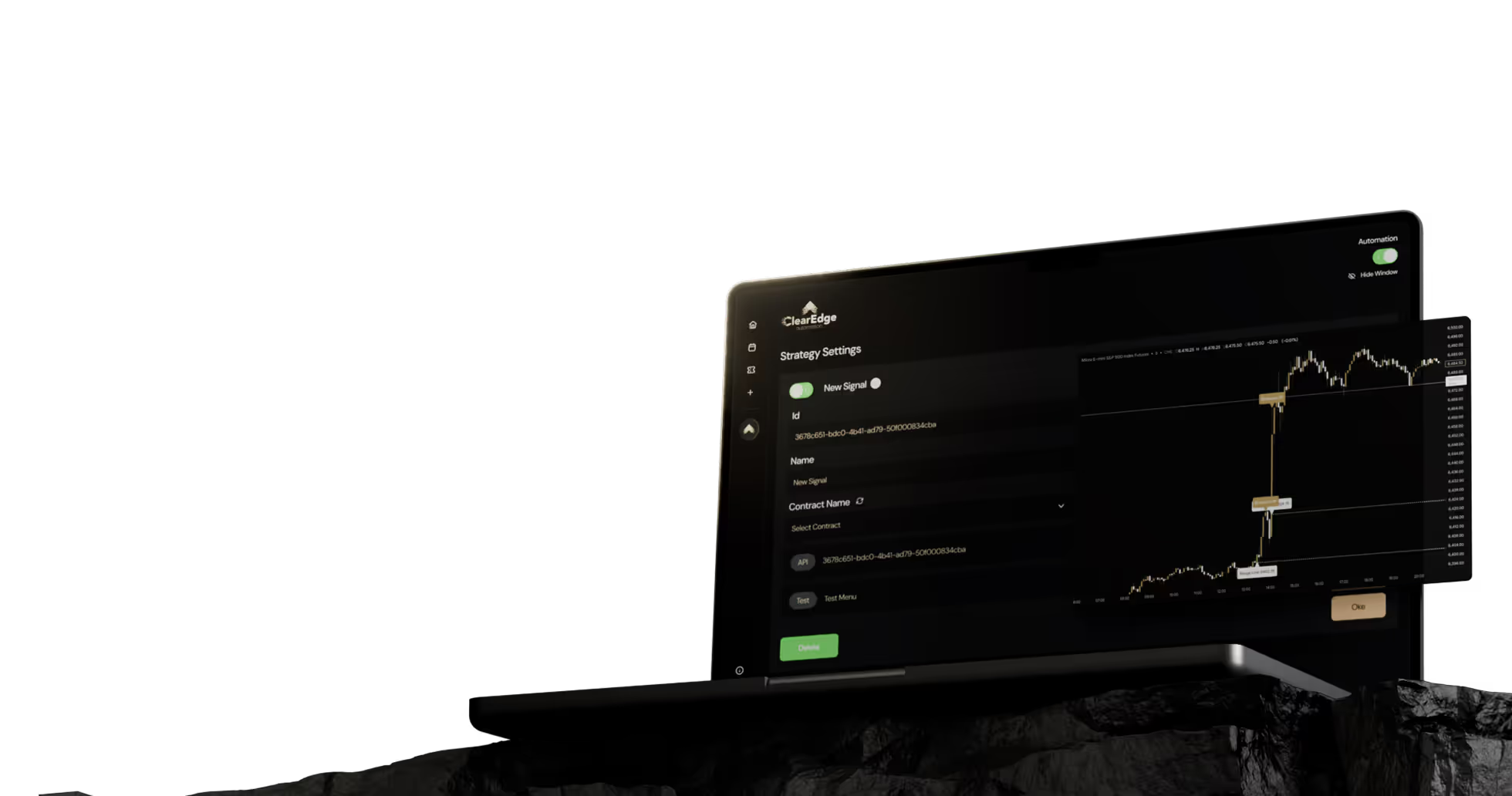
ClearEdge Trading is one example of the integrated model. Webhooks from TradingView hit the platform's cloud infrastructure directly, with execution speeds of 3-40ms to supported brokers. There's no VPS to rent, configure, or maintain. For traders who don't want to be a part-time sysadmin, this can be cheaper overall than a $25/month VPS plus the time spent maintaining it. Other platforms in this category include various cloud-based webhook services, with different broker support and pricing models.
Whether the integrated model saves money depends on your scale. One trader running one strategy: cloud-integrated usually wins. A trader running multiple custom-coded systems on Sierra Chart: dedicated trading server still makes sense. For a deeper comparison, see our futures automation platform comparison.
Ready to skip the VPS rental entirely? Explore ClearEdge Trading and see how cloud-integrated automation runs your TradingView strategies without a separate server.
Frequently Asked Questions
1. What is the cheapest VPS for automated futures trading that actually works?
Linux VPS plans from Contabo or Hetzner at $5-8/month work for webhook-only automation. For Windows-based platforms like NinjaTrader or TradeStation, expect $15-25/month minimum from providers like Vultr Chicago or Contabo Windows.
2. Can I run automated futures trading on a free VPS?
Yes, for lightweight Linux-based webhook scripts, Oracle Cloud's Always Free tier works reliably. Free options don't work well for Windows trading platforms or strategies with high CPU demands during news events.
3. How much RAM do I need for a futures trading VPS?
2GB RAM is the absolute minimum for a single platform. Most traders should target 4-8GB RAM to run a chart platform plus monitoring tools without lag during volatile sessions like FOMC or NFP releases.
4. Does VPS location really matter for futures trading?
Yes, especially for scalping or low-latency strategies. A Chicago-area VPS reduces round-trip time to CME's matching engine in Aurora, Illinois compared to a server in Europe or Asia, which can save 50-200ms per order.
5. Linux VPS or Windows VPS for trading automation?
Linux is cheaper and fine if you only need to receive webhooks and forward orders via API. Windows is required for desktop platforms like NinjaTrader, TradeStation, Sierra Chart, or MultiCharts that don't run natively on Linux.
6. What uptime should I expect from a cheap trading VPS?
Reputable providers offer 99.9% uptime SLAs, which translates to about 8-9 hours of allowed downtime per year. Avoid providers without published SLAs, especially at the ultra-budget tier where overselling causes performance issues.
Conclusion
The cheapest VPS for automated futures trading isn't the absolute lowest price, it's the lowest price that meets your minimum specs, sits in a trading-friendly location, and offers a real uptime SLA. For most retail futures traders, that's $15-25/month for Windows-capable plans or $5-10/month for Linux webhook-only setups.
Before renting any VPS, decide whether you need one at all. Cloud-integrated automation platforms can replace third party VPS rental entirely, and the math often favors the integrated approach for traders running standard TradingView-to-broker workflows. Paper trade your setup first to validate execution before committing real capital.
References
- CME Group. "CME Globex Co-location Services." cmegroup.com/trading/colocation
- TradingView. "Webhook Documentation." tradingview.com/support
- Oracle Cloud. "Always Free Resources." oracle.com/cloud/free
- AWS. "Lightsail Pricing." aws.amazon.com/lightsail/pricing
- CFTC. "Futures Trading Risk Disclosure." cftc.gov
Disclaimer: This article is for educational purposes only. It is not trading advice. ClearEdge Trading executes trades based on your rules, it does not provide signals or recommendations.
Risk Warning: Futures trading involves substantial risk. You could lose more than your initial investment. Past performance does not guarantee future results. Only trade with capital you can afford to lose.
CFTC RULE 4.41: Hypothetical results have limitations and do not represent actual trading.
By: ClearEdge Trading Team | 29+ Years CME Floor Trading Experience | About














































Steal the PlaybooksOther TradersDon’t Share
Every week, we break down real strategies from traders with 100+ years of combined experience, so you can skip the line and trade without emotion.