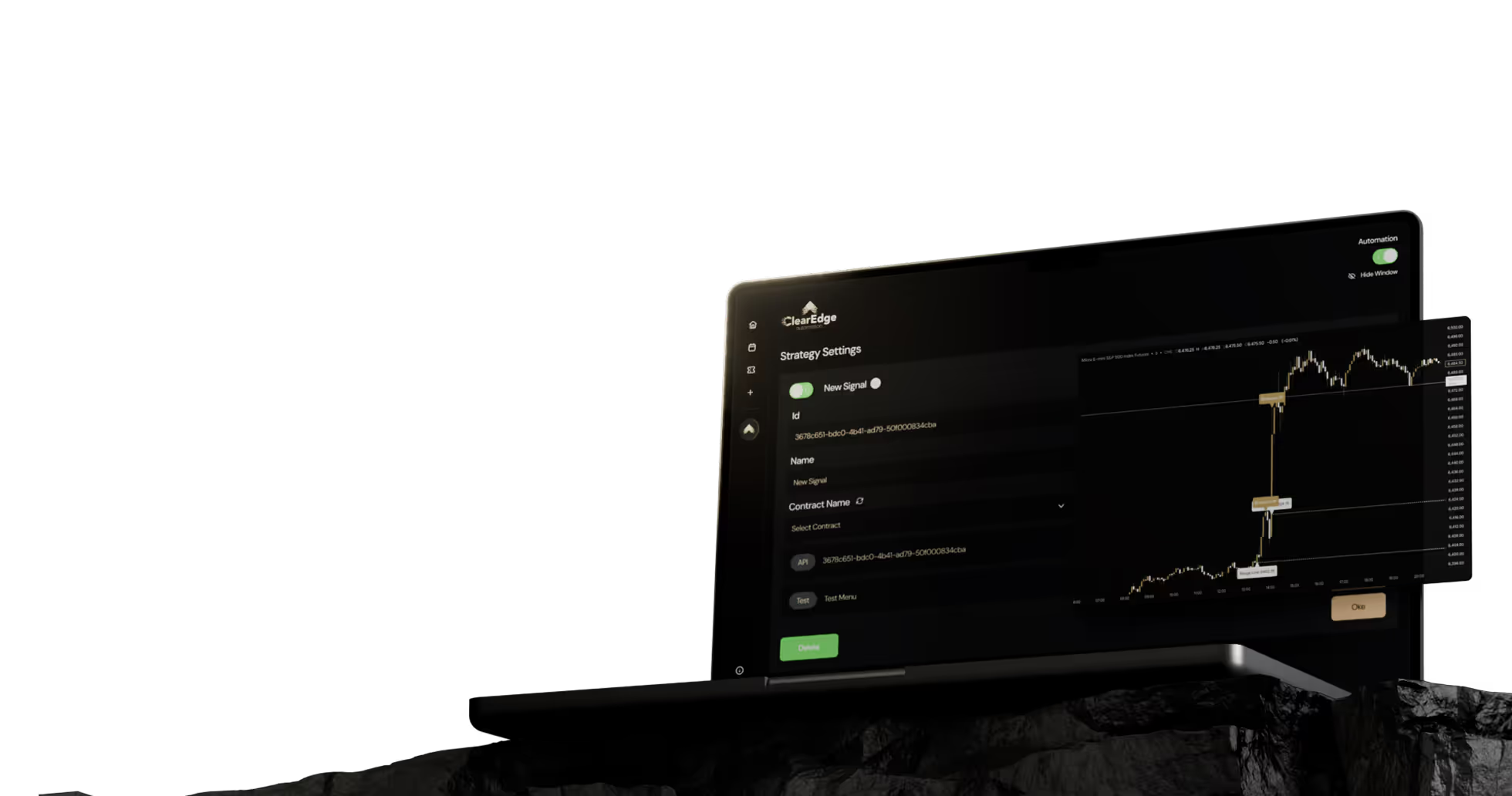
TradingView Overnight Trading Automation Setup Guide For Futures
Automate overnight futures trading using TradingView webhooks. Learn to configure session filters, adjust risk for wider spreads, and connect your broker API.


TradingView automation overnight trading setup involves configuring your alerts, webhooks, and risk parameters to execute futures trades automatically during extended sessions (6:00 PM - 9:30 AM ET). This requires enabling TradingView webhook alerts, connecting them to your automation platform with proper JSON formatting, setting session-specific stop losses and take profits, and configuring broker API connections to handle trades when you're not monitoring the screen.
Key Takeaways
- Overnight futures sessions (6:00 PM - 9:30 AM ET) typically see wider spreads of 0.50-1.00 points on ES, requiring adjusted stop loss distances
- TradingView webhooks must include session filters in your alert conditions to prevent daytime strategies from firing overnight
- Risk controls like daily loss limits and max position sizes should be set lower for overnight trading due to reduced liquidity
- Test your overnight automation setup in simulation for at least 2 weeks before trading live capital
Table of Contents
- What Is Overnight Futures Trading?
- Why Automate Overnight Trading?
- How to Set Up TradingView Alerts for Overnight Sessions
- Webhook Configuration for Session Management
- Risk Parameters for Overnight Automation
- Broker Requirements and API Connections
- How to Test Your Overnight Automation Setup
- Common Overnight Automation Mistakes
- Frequently Asked Questions
- Conclusion
What Is Overnight Futures Trading?
Overnight futures trading refers to trading during extended sessions outside regular U.S. stock market hours (9:30 AM - 4:00 PM ET). For ES, NQ, and other major futures contracts, overnight sessions run from 6:00 PM ET through 9:30 AM ET the following day, with a brief maintenance window from 5:00 PM - 6:00 PM ET.
Extended Trading Hours: Futures markets operate nearly 24 hours, unlike stock markets. ES and NQ trade Sunday 6:00 PM through Friday 5:00 PM ET with only a one-hour daily break for settlement.
Overnight sessions typically show different characteristics than regular trading hours. Volume drops by 40-60% compared to daytime sessions, according to CME Group data. Price action tends to be choppier with wider bid-ask spreads. ES spreads during regular hours average 0.25 points but can widen to 0.50-1.00 points overnight.
Many futures traders focus on overnight sessions to capture gap moves triggered by Asian and European market activity or economic data releases from overseas markets. Automation becomes particularly valuable here since manually monitoring overnight price action requires staying awake through non-standard hours.
Why Automate Overnight Trading?
Overnight automation eliminates the need to monitor markets during hours when you're typically sleeping or unavailable. Your TradingView alerts fire, webhooks transmit trade instructions, and your broker executes orders based on your predefined rules without manual intervention.
The main advantages of overnight automation include capturing opportunities in international market hours, avoiding the fatigue and decision errors that come with manual overnight monitoring, and maintaining consistent strategy execution regardless of your availability. If a strategy signals at 2:00 AM, automation handles it the same way it would at 2:00 PM.
Traders using prop firm automation particularly benefit from overnight setups since many funded accounts require trading a minimum number of days. Automation lets you meet activity requirements without disrupting your sleep schedule. However, overnight trading also carries risks: lower liquidity means larger slippage, news events can cause gaps, and technical issues may go unnoticed for hours.
Advantages
- Capture overnight gap moves and international market reactions
- Maintain strategy consistency without manual monitoring
- Meet prop firm trading day requirements efficiently
- Execute Opening Range strategies automatically at market open
Limitations
- Wider spreads increase slippage costs by 1-2 ticks per trade
- Lower volume makes large position entries more difficult
- Technical failures may go unnoticed for hours
- Gap risk from overseas news events harder to manage
How to Set Up TradingView Alerts for Overnight Sessions
TradingView alerts for overnight automation require session filters in your alert conditions to prevent daytime strategies from triggering during extended hours. Use Pine Script's session.regular or custom time filters to define when alerts should fire.
In your Pine Script strategy, add session filtering like this:
is_overnight = not session.regularAlert Conditions: Alert conditions are Pine Script expressions that determine when TradingView sends a webhook to your automation platform. Conditions should be specific enough to avoid false signals but flexible enough to catch valid setups.
is_regular = session.regular
// Only trigger overnight alerts
if is_overnight and your_entry_condition
alert("Long Entry", alert.freq_once_per_bar_close)
Configure alert settings with "Once Per Bar Close" frequency to avoid mid-bar false signals. Enable webhook URL and construct your JSON payload with all necessary trade parameters. Your alert message should include entry price, stop loss, take profit, position size, and session identifier so your automation platform knows how to handle the trade.
For overnight ES automation, you might set stop losses 25-50% wider than daytime settings. If your regular hours stop is 8 points, consider 10-12 points overnight to account for wider spreads and choppier price action.
Webhook Configuration for Session Management
Webhook configuration for overnight trading requires your JSON payload to include session identifiers and time-specific parameters that your automation platform can parse and execute correctly. The webhook URL points to your automation platform's endpoint, and the message body contains structured trade data.
A typical overnight webhook JSON payload looks like this:
{
  "ticker": "ES",
  "action": "buy",
  "price": "{{close}}",
  "quantity": 1,
  "stop_loss": "{{close}} - 12",
  "take_profit": "{{close}} + 18",
  "session": "overnight",
  "timestamp": "{{timenow}}"
}
Your automation platform must be configured to receive and validate this JSON data. Platforms like ClearEdge Trading parse the JSON, apply any additional risk rules you've configured, and transmit the order to your broker via API. Response times typically range from 3-40ms depending on your broker's API speed.
JSON Payload: JSON (JavaScript Object Notation) is a structured data format that transmits trade instructions from TradingView to your automation platform. Each field contains specific trade parameters like ticker symbol, action, quantity, and price levels.
Test your webhook by manually triggering an alert and confirming the trade appears in your automation platform's log. Check that all parameters populate correctly and that stop loss and take profit distances match your intended settings. Many webhook errors stem from incorrect syntax in the JSON message, particularly mismatched brackets or missing commas.
For more detailed webhook setup instructions, see our TradingView automation guide.
Risk Parameters for Overnight Automation
Overnight automation requires tighter risk controls than daytime trading due to reduced liquidity and increased gap risk. Set daily loss limits 30-50% lower than your regular session limits, and reduce maximum position sizes to account for potentially wider slippage.
ParameterRegular HoursOvernight SessionsDaily Loss Limit$500$300-350Max Position Size3 contracts1-2 contractsStop Loss Distance (ES)8 points10-12 pointsMax Open Trades21
Consider implementing a "kill switch" time where automation stops accepting new signals. For example, halt new entries after 4:00 AM ET to avoid getting caught in pre-market volatility spikes that occur 30-60 minutes before the 9:30 AM open. Your existing positions can remain active with their stops and targets, but no new trades initiate.
Many traders using prop firm accounts set even stricter overnight limits since violating daily loss rules typically results in account termination. If your prop account has a $1,000 daily loss limit, consider capping overnight risk at $300-400 to preserve buffer room for regular session trading.
Built-in risk controls in automation platforms help enforce these limits programmatically. You set the parameters once, and the system rejects any trade that would exceed your defined thresholds. This removes the emotional decision-making that can lead to revenge trading after overnight losses.
Broker Requirements and API Connections
Your broker must support API connections for automated trade execution during overnight sessions. Not all brokers offer 24-hour API access, and some impose additional margin requirements for overnight positions held past 4:00 PM ET.
Check your broker's API documentation for maintenance windows. Some brokers disconnect API access during the 5:00-6:00 PM ET settlement period, which means any orders during that hour will fail. Your automation setup should pause during known maintenance windows to avoid rejected orders.
Broker API: A broker API (Application Programming Interface) is a connection protocol that allows external software to send trade orders directly to your brokerage account. APIs enable automated execution without manual order entry through the broker's trading platform.
Popular futures brokers supporting overnight automation include:
- TradeStation: 24-hour API access, maintenance 4:30-5:30 PM ET weekdays
- NinjaTrader Brokerage: Full overnight support, brief maintenance during settlement
- AMP Futures: Supports CQG and Rithmic API connections, 24-hour access
- Interactive Brokers: 24-hour API, higher margin requirements for overnight holds
Confirm your broker allows automated trading under their terms of service. Some brokers restrict or prohibit fully automated strategies and may close accounts that violate these terms. Check supported brokers to verify compatibility with your automation platform.
Latency matters less overnight than during regular hours, but ensure your API connection remains stable. A dropped connection at 2:00 AM means trades won't execute until you notice and reconnect. Some automation platforms include connection monitoring and automatic reconnection features to handle temporary disruptions.
How to Test Your Overnight Automation Setup
Test your overnight automation in simulation mode for at least 2 weeks before committing live capital. This validates that alerts fire correctly, webhooks transmit properly, and trades execute as expected during low-volume overnight sessions.
Overnight Automation Testing Checklist
- ☐ Configure TradingView alerts with session filters and test manual triggering
- ☐ Verify webhook JSON payload includes all required fields (ticker, action, price, stops)
- ☐ Confirm automation platform receives and logs webhook data correctly
- ☐ Execute 5-10 paper trades during overnight hours to check order flow
- ☐ Validate stop loss and take profit orders appear in broker platform
- ☐ Test during settlement window (5:00-6:00 PM ET) to confirm error handling
- ☐ Monitor slippage by comparing alert price to actual fill price
- ☐ Review morning session transitions (9:29-9:31 AM ET) for any execution issues
- ☐ Run for 10+ overnight sessions before going live
Pay close attention to the transition periods around 6:00 PM ET (overnight session open) and 9:30 AM ET (regular session open). These times often see brief volatility spikes that can trigger stops prematurely if set too tight. Review your fills during these windows to ensure your stop distances are appropriate.
Document every test trade with entry price, exit price, slippage, and time of execution. Compare overnight slippage to your regular hours data. If overnight slippage averages 1.5-2 ticks vs 0.5 ticks during the day, factor this into your strategy's expected performance and adjust position sizing accordingly.
Some traders test overnight automation by starting with Opening Range strategies that only trade the first 30-60 minutes after 9:30 AM open. This captures overnight gap information without requiring continuous monitoring through the full overnight session. Once comfortable, expand to full overnight automation.
Common Overnight Automation Mistakes
Using Daytime Stop Loss Distances
Overnight spreads and volatility require wider stops. An 8-point stop that works during regular hours will often get hit by noise overnight. Increase stops by 25-50% for overnight sessions. ES stops should typically be 10-12 points minimum overnight vs 6-8 points during the day.
Ignoring Settlement Windows
The 5:00-6:00 PM ET window closes most futures markets for settlement. Orders during this period fail or get queued until reopening. Configure your automation to pause during settlement to avoid rejected orders and error logs.
Not Adjusting Position Sizes
Lower overnight liquidity means larger positions cause more slippage. If you trade 3 contracts during regular hours, reduce to 1-2 overnight. The reduced liquidity makes it harder to enter and exit at favorable prices.
Forgetting News Event Filters
Major economic releases from Asian or European markets can gap prices before you can react. Add news calendar awareness to your automation or avoid trading overnight during high-impact event windows like ECB announcements or Chinese economic data releases.
Frequently Asked Questions
1. What are the best futures contracts for overnight automation?
ES (E-mini S&P 500) and NQ (E-mini Nasdaq) offer the best overnight liquidity with average volume of 200,000-400,000 contracts during extended sessions. Micro contracts (MES, MNQ) work well for smaller accounts but have slightly wider spreads of 0.50-0.75 points overnight.
2. How much capital do I need for overnight futures automation?
For ES overnight automation, maintain at least $3,000-5,000 in your account to handle margin requirements plus drawdown buffer. NQ requires similar amounts. Micro contracts reduce this to $500-1,000 but test thoroughly before going live with any capital.
3. Can I run overnight automation on a prop firm account?
Yes, but verify your prop firm allows automated trading and overnight positions. Most firms permit automation but require you to monitor risk limits closely. Set your automation's daily loss limit below the firm's threshold to maintain a safety buffer.
4. What happens if my internet disconnects overnight?
Existing positions remain open at your broker, but new alerts won't transmit to your automation platform. Most platforms include reconnection features, but consider using a VPS (Virtual Private Server) for more reliable uptime. A VPS costs $20-50/month and runs 24/7 independently of your home computer.
5. Should I use market or limit orders for overnight automation?
Market orders ensure fills but accept current spread costs. Limit orders control price but may not fill in fast-moving markets. For overnight automation, market orders work better since liquidity is already reduced and limit orders may sit unfilled. Accept the wider spread as a cost of overnight trading.
Conclusion
TradingView automation overnight trading setup requires careful attention to session filters, risk parameters, and broker API connections to execute trades reliably during extended hours. Wider stops, reduced position sizes, and thorough testing in simulation mode help manage the unique challenges of overnight futures trading including lower liquidity and gap risk.
Start with paper trading for at least 2 weeks to validate your webhook configuration and risk controls before committing live capital. Monitor your overnight slippage data and adjust stop distances based on actual fills rather than backtest assumptions.
Ready to automate your overnight trading? View ClearEdge Pricing →
References
- CME Group - E-mini S&P 500 Futures Contract Specifications
- CME Group - Trading Hours and Holiday Schedule
- TradingView - Pine Script Session Management Documentation
- CFTC - Commodity Exchange Act Regulations
Disclaimer: This article is for educational and informational purposes only. It does not constitute trading advice, investment advice, or any recommendation to buy or sell futures contracts. ClearEdge Trading is a software platform that executes trades based on your predefined rules—it does not provide trading signals, strategies, or personalized recommendations.
Risk Warning: Futures trading involves substantial risk of loss and is not suitable for all investors. You could lose more than your initial investment. Past performance of any trading system, methodology, or strategy is not indicative of future results. Before trading futures, you should carefully consider your financial situation and risk tolerance. Only trade with capital you can afford to lose.
CFTC RULE 4.41: HYPOTHETICAL OR SIMULATED PERFORMANCE RESULTS HAVE CERTAIN LIMITATIONS. UNLIKE AN ACTUAL PERFORMANCE RECORD, SIMULATED RESULTS DO NOT REPRESENT ACTUAL TRADING. ALSO, SINCE THE TRADES HAVE NOT BEEN EXECUTED, THE RESULTS MAY HAVE UNDER-OR-OVER COMPENSATED FOR THE IMPACT, IF ANY, OF CERTAIN MARKET FACTORS, SUCH AS LACK OF LIQUIDITY.
By: ClearEdge Trading Team | 29+ Years CME Floor Trading Experience | About























































Steal the PlaybooksOther TradersDon’t Share
Every week, we break down real strategies from traders with 100+ years of combined experience, so you can skip the line and trade without emotion.