Capitalise.ai vs TradersPost: Best TradingView Futures Automation Comparison
Compare Capitalise.ai and TradersPost for TradingView futures automation. Find the best tool for CME execution, prop firm accounts, and low-latency webhooks.


Capitalise.ai and TradersPost both convert TradingView alerts into automated futures trades, but they take different approaches. Capitalise.ai uses plain-English rule building with limited futures broker support, while TradersPost focuses on webhook-driven execution across more futures brokers including Tradovate and TradeStation. For dedicated futures automation, ClearEdge Trading is a third alternative built specifically for CME futures and prop firm accounts.
Key Takeaways
- Capitalise.ai uses natural-language strategy building; TradersPost uses webhook JSON payloads from TradingView alerts
- TradersPost supports more futures brokers (Tradovate, TradeStation, Rithmic via TradeStation) than Capitalise.ai's narrower futures coverage
- Capitalise.ai pricing starts around $19-99/month; TradersPost runs $39-99/month with prop firm tiers
- Neither is purpose-built for CME futures, ClearEdge Trading is an alternative designed specifically for ES, NQ, GC, CL automation
- Webhook latency typically runs 50-300ms across these platforms depending on broker integration depth
Table of Contents
- Capitalise.ai vs TradersPost: Quick Comparison
- How Each Platform Approaches Automation
- Futures Broker Support Compared
- Pricing and Plans Side by Side
- Why Consider ClearEdge as an Alternative?
- Which Platform Should You Choose?
- Frequently Asked Questions
Capitalise.ai vs TradersPost: Quick Comparison
Capitalise.ai and TradersPost are both TradingView automation tools, but they solve different problems. Capitalise.ai lets you build strategies using plain English rules without any TradingView alert at all. TradersPost is a webhook bridge that takes your existing TradingView alerts and routes them to your broker.
FeatureCapitalise.aiTradersPostStrategy creationPlain English rulesTradingView alerts + webhooksPine Script supportLimitedFull (via webhooks)Futures brokersNarrow selectionTradovate, TradeStationProp firm supportLimitedYes (Apex, TopStep via Tradovate)Starting price~$19/month~$39/monthMulti-accountAvailable higher tiersAvailable, scales with planBest forStocks, crypto, forexMixed assets including futures
If you trade CME futures specifically and want a platform built around that workflow, the futures automation platform comparison guide covers purpose-built options like ClearEdge Trading.
How Each Platform Approaches Automation
The core approach difference is what trips up most traders evaluating these platforms. Capitalise.ai wants to replace your strategy-building tool. TradersPost wants to be the pipe between your existing strategy and your broker.
Capitalise.ai: Natural Language Rules
Capitalise.ai lets you type rules like "if RSI on ES 5min crosses below 30, buy 1 contract with 10 tick stop and 20 tick target." The platform parses that into executable logic. You don't need TradingView at all for basic strategies, though you can connect TradingView alerts as triggers.
Natural Language Strategy Builder: A system that converts plain English instructions into executable trading rules. It removes the need for Pine Script or webhook setup but limits you to the platform's built-in indicators and order types.
This approach works for traders who want to skip Pine Script entirely. The trade-off is that complex multi-indicator strategies, custom Pine Script logic, or third-party indicators don't translate cleanly into the natural-language framework.
TradersPost: Webhook Execution Bridge
TradersPost takes a different path. You build your strategy in TradingView using any indicator or Pine Script you want. When the alert fires, TradingView sends a webhook to TradersPost, which translates the JSON payload into a broker order.
This means you keep all the flexibility of TradingView's charting and strategy testing. The platform handles the broker connection, order routing, position sizing, and risk parameters. For traders who already have TradingView strategies running, TradersPost integrates without forcing a rewrite. The TradingView webhook setup guide covers how this flow works in practice.
Futures Broker Support Compared
Futures support is where these platforms diverge most clearly. If you trade CME products like ES, NQ, GC, or CL, broker integration depth matters more than feature breadth.
Capitalise.ai Futures Coverage
Capitalise.ai's strength is in stocks, crypto, and forex. Its futures broker support is narrower, primarily focused on a handful of brokers, and the integration depth varies. Some futures contracts may only work through CFD-style instruments rather than direct CME contracts.
For traders who want true CME futures execution with proper tick values, margin treatment, and Section 1256 tax handling, this can be a limitation. Check current broker documentation before assuming your specific futures broker is supported.
TradersPost Futures Coverage
TradersPost has invested more in futures broker integrations. Tradovate is the primary futures connection, which also opens access to many prop firms (Apex Trader Funding, TopStep, Bulenox, MyFundedFutures) that clear through Tradovate. TradeStation is also supported for direct retail futures accounts.
Webhook Bridge: Software that receives HTTP POST requests from TradingView alerts and translates them into broker API calls. Latency, payload format, and broker authentication determine reliability and execution speed.
For prop firm traders specifically, TradersPost's Tradovate integration is one reason it gets recommended. You can run automated strategies against funded accounts as long as the prop firm allows automation. The prop firm automation guide covers which firms permit bots and which don't.
Pricing and Plans Side by Side
Pricing tier comparison gets complicated because both platforms structure plans around feature gates rather than flat usage. Here's the pricing breakdown as of late 2025, though both platforms adjust pricing periodically.
TierCapitalise.aiTradersPostEntry~$19-29/month (limited strategies)~$39/month (1 broker, basic)Mid~$49-69/month~$59-79/month (multi-account)Pro~$99+/month~$99+/month (full features)Strategy limitTieredTiered by planAccount limitTieredTiered, prop firm bundles
Hidden costs to factor in: TradingView Pro+ or Premium is essentially required ($14.95-$59.95/month) because lower TradingView tiers limit alerts and webhook access. Broker data fees, prop firm evaluation costs, and any VPS for reliability also stack on top. The hidden costs analysis breaks this down further.
Always confirm current pricing on each provider's site before committing. Subscription terms change.
Why Consider ClearEdge as an Alternative?
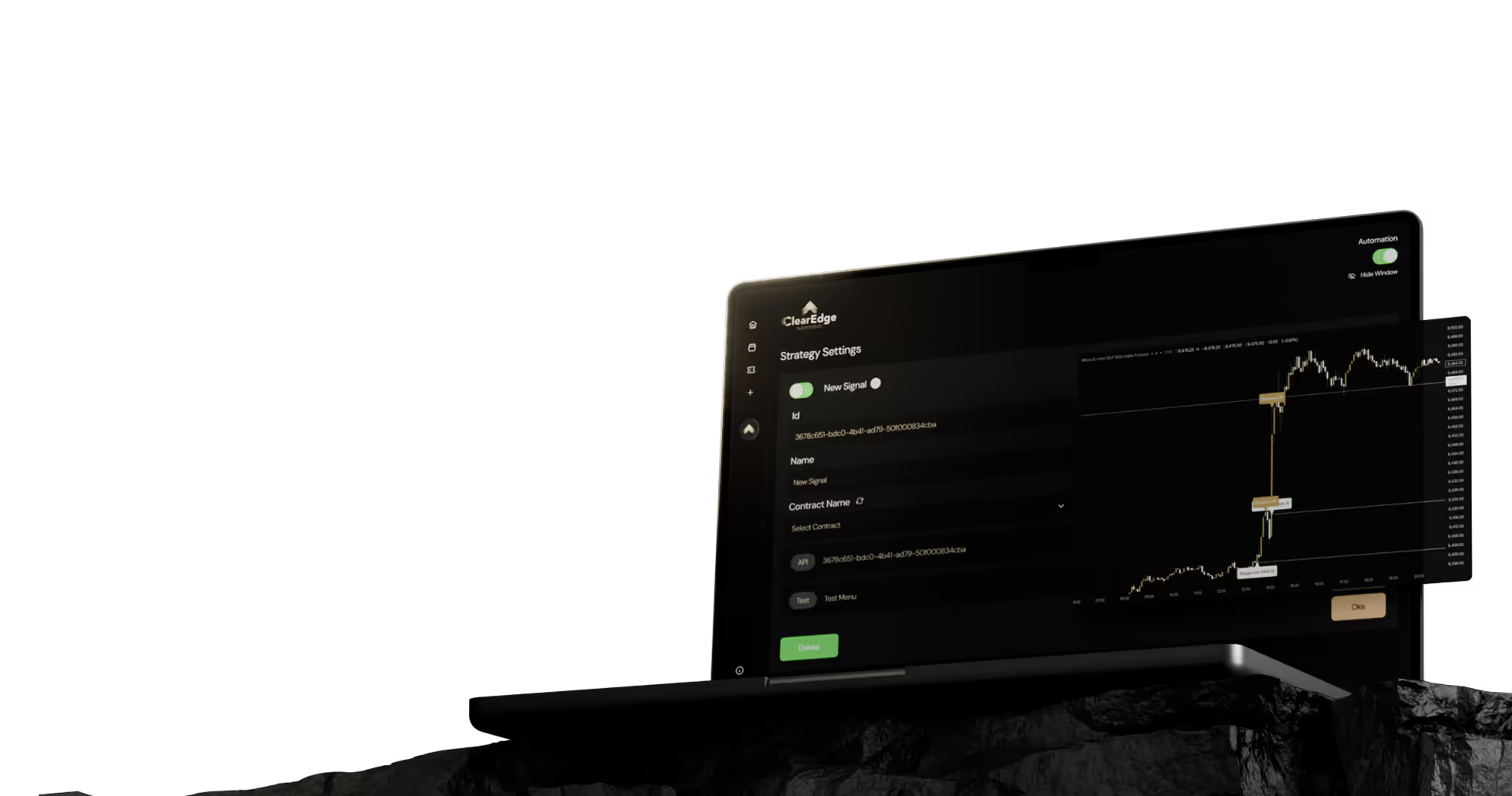
If you trade CME futures specifically, a third option exists. ClearEdge Trading is built around futures automation rather than treating futures as one asset class among many. The platform connects TradingView alerts to futures brokers including Tradovate, TradeStation, NinjaTrader, and others, with execution speeds typically in the 3-40ms range depending on broker connection.
The differences matter for futures-specific workflows:
- Built-in prop firm rule support: Daily loss limits, trailing drawdown tracking, and consistency rules configured per account
- CME contract handling: Proper tick values, contract rollover support, and session-aware execution for ES, NQ, GC, CL
- Multi-account capability: Run strategies across multiple funded accounts or retail accounts from one interface
- OR/IB strategy templates: Opening Range and Initial Balance setups common in futures day trading
ClearEdge isn't the only option, and it's not the right fit for everyone. If you trade equities or crypto primarily, Capitalise.ai or TradersPost may serve you better. If your focus is CME futures and prop firm accounts, the integration depth matters. See supported brokers for current connection options.
Which Platform Should You Choose?
The right answer depends on what you trade, how you build strategies, and which brokers you use. Here are three scenarios that map to common trader profiles.
Choose Capitalise.ai if...
You trade stocks, crypto, or forex primarily, you don't want to learn Pine Script, and you prefer building strategies through plain-English rules. Futures traders generally find the broker support too thin for serious CME automation.
Choose TradersPost if...
You already have TradingView strategies you trust, you trade a mix of futures and other assets, and you want a flexible webhook bridge that works across multiple brokers. The Tradovate integration makes it usable for prop firm trading.
Choose ClearEdge if...
You trade CME futures specifically, you want prop firm rule compliance built in, and you need execution latency optimized for futures markets. The platform is narrower in scope but deeper in futures-specific features. Paper trade first to validate any platform with your strategy before going live.
Execution Latency: The time between an alert firing and the order reaching the exchange. For active futures strategies, latency under 100ms reduces slippage; over 500ms can materially hurt scalping or breakout strategies.
Frequently Asked Questions
1. Can Capitalise.ai trade ES and NQ futures directly?
Capitalise.ai's futures support depends on which brokers it integrates with at any given time, and direct CME futures access is narrower than its stock or crypto coverage. Verify current futures broker integration on Capitalise.ai's site before assuming your broker and contract are supported.
2. Does TradersPost work with prop firm accounts like Apex or TopStep?
TradersPost works with prop firms that clear through Tradovate, which includes Apex Trader Funding, TopStep, Bulenox, and MyFundedFutures, as long as the prop firm permits automated trading. Always check your prop firm's current automation policy before running bots on a funded account.
3. Which platform has lower latency for futures execution?
Latency depends more on the broker connection and your network setup than the platform itself, but webhook-based bridges typically run 50-300ms end to end. Platforms with native broker API integrations usually outperform pure webhook relays for fast-moving markets.
4. Do I still need TradingView with these platforms?
TradersPost requires TradingView (typically Pro or higher) because it depends on TradingView alerts and webhooks. Capitalise.ai can work without TradingView for its native rule builder, but you'll likely want TradingView for charting and strategy development anyway.
5. Can I run the same strategy across multiple accounts?
Both platforms offer multi-account support on higher tiers, with TradersPost generally offering more flexible per-account configuration. ClearEdge Trading is also built around multi-account workflows for traders managing several funded or retail accounts simultaneously.
6. What happens if a webhook fails to deliver?
Webhook delivery failures can result in missed trades or partial fills, which is why redundancy and monitoring matter for live automation. Most platforms include retry logic and alert notifications, but you should paper trade first and monitor logs before committing real capital.
Conclusion
Capitalise.ai and TradersPost solve overlapping problems with different philosophies: Capitalise.ai replaces strategy building with plain-English rules, TradersPost bridges your existing TradingView strategies to brokers. For dedicated CME futures and prop firm work, a futures-first platform like ClearEdge Trading is worth comparing against both.
Test any platform with paper trading before live execution, confirm current broker support and pricing on each provider's site, and pick the tool that matches your actual trading workflow rather than the one with the longest feature list.
Ready to automate your CME futures trading? Explore ClearEdge Trading and see how no-code futures automation works with your TradingView strategies.
References
- CME Group - Equity Index Futures Specifications
- TradingView - About Webhooks Documentation
- Tradovate - Futures Broker Platform
- U.S. Commodity Futures Trading Commission
- ClearEdge - Futures Automation Platform Comparison
Disclaimer: This article is for educational purposes only. It is not trading advice. ClearEdge Trading executes trades based on your rules, it does not provide signals or recommendations. Pricing and feature information for third-party platforms is based on publicly available data and may change.
Risk Warning: Futures trading involves substantial risk. You could lose more than your initial investment. Past performance does not guarantee future results. Only trade with capital you can afford to lose.
CFTC RULE 4.41: Hypothetical results have limitations and do not represent actual trading.
By: ClearEdge Trading Team | 29+ Years CME Floor Trading Experience | About














































Steal the PlaybooksOther TradersDon’t Share
Every week, we break down real strategies from traders with 100+ years of combined experience, so you can skip the line and trade without emotion.