Top 5 TradersPost Alternatives for Automated Futures Trading
Scale your futures automation with the best TradersPost alternatives. Compare ClearEdge, NinjaTrader, and more for no-code setup and prop firm compatibility.


TradersPost works for many automated futures traders, but alternatives exist with different broker coverage, pricing, and execution profiles. The top 5 alternatives to TradersPost for futures automation are ClearEdge Trading, NinjaTrader, TradeStation, Sierra Chart, and MotiveWave. Each has tradeoffs in latency, broker support, no-code accessibility, and prop firm compatibility worth comparing before switching.
Key Takeaways
- ClearEdge Trading offers no-code TradingView automation with 3-40ms execution and 20+ broker integrations, including most major prop firms.
- NinjaTrader provides deep charting and NinjaScript coding, but requires programming knowledge for custom strategies.
- TradeStation has institutional-grade infrastructure and EasyLanguage scripting, with monthly platform fees that vary by activity level.
- Sierra Chart appeals to order flow traders with low monthly costs but a steep setup learning curve.
- MotiveWave focuses on Elliott Wave and harmonic pattern automation, best for discretionary traders adding rule-based execution.
Table of Contents
- Why Look at TradersPost Alternatives?
- Quick Comparison Table
- 1. ClearEdge Trading
- 2. NinjaTrader
- 3. TradeStation
- 4. Sierra Chart
- 5. MotiveWave
- Which Should You Choose?
- FAQ
Why Look at TradersPost Alternatives?
Traders search for top 5 alternatives to TradersPost for futures automation when they hit limits on broker support, pricing tiers, prop firm compatibility, or feature depth. TradersPost is a solid TradingView-to-broker bridge, but it isn't the only option, and it isn't the best fit for every workflow.
Common reasons traders evaluate alternatives include needing wider broker integration, lower monthly costs at scale, faster execution paths, better prop firm rule handling, or different feature priorities like order flow tools or built-in charting. A trading platform comparison should weigh execution speed, broker support coverage, pricing tier comparison, integration depth, and user experience review side by side.
Futures Automation Platform: Software that converts trading signals (often from TradingView) into live broker orders without manual clicking. It matters because milliseconds of delay and broker fit can change your real-world results.
Quick Comparison Table
PlatformNo-Code?TradingView WebhooksBroker CoverageProp Firm SupportStarting PriceClearEdge TradingYesNative20+ brokersBroadLow monthlyNinjaTraderPartialVia add-onsNT Brokerage + selectLimitedFree platform, lifetime feeTradeStationNo (EasyLanguage)Via API/bridgeTradeStation onlyLimitedActivity-basedSierra ChartNoVia custom setupMultiple via DTC/RithmicSomeTiered monthlyMotiveWavePartialVia APIMultipleSomeTiered, higher
Pricing and feature details change frequently. Verify current details on each vendor's site before subscribing.
1. ClearEdge Trading
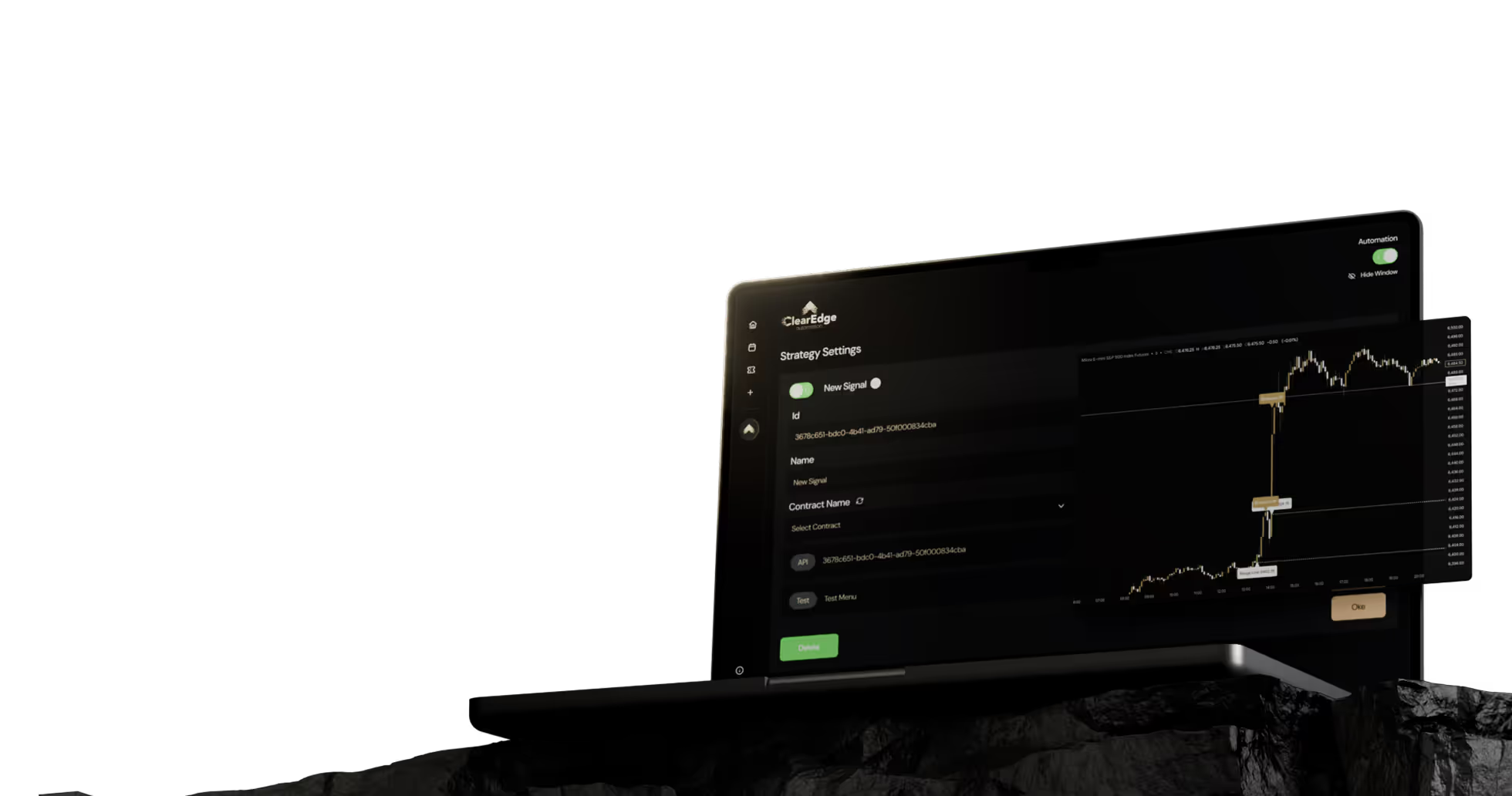
ClearEdge Trading is a no-code futures automation platform built specifically for converting TradingView alerts into live broker orders. It targets retail and prop firm traders who want fast setup without writing Pine Script strategy code or custom APIs.
What ClearEdge Does Well
- Execution speed: 3-40ms typical latency from alert to broker, depending on broker connection.
- Broker support: 20+ integrations covering major futures brokers and prop firms. See supported brokers for the current list.
- No-code workflow: Set up alerts in TradingView, configure webhooks, the platform handles execution.
- Prop firm compatibility: Built-in handling for daily loss limits, trailing drawdown, and consistency rules common at firms like Apex, TopStep, and FTMO-style evaluations.
- Multi-account capability: Manage multiple accounts from one interface, useful for scaling or running parallel prop challenges.
Tradeoffs
ClearEdge focuses on TradingView-driven automation. If you want a full charting suite with proprietary scripting (like NinjaScript or EasyLanguage), you'll still rely on TradingView for chart analysis. For most traders this is a feature, not a limitation, since TradingView's charts and Pine Script ecosystem are widely used.
Webhook: An HTTP message TradingView sends when an alert fires, carrying instructions like symbol, side, and size. It matters because it's how no-code automation connects charts to real orders.
For setup details, see the TradingView automation guide.
2. NinjaTrader
NinjaTrader is a desktop futures platform with deep charting, a proprietary scripting language (NinjaScript), and its own brokerage. It's a long-standing option for traders who want everything in one application.
Strengths
- Mature charting with order flow add-ons available.
- NinjaScript allows fully custom automated strategies.
- Free platform license for live trading through NT Brokerage; lifetime license available for advanced features.
Tradeoffs
- Custom strategy development requires C# programming via NinjaScript.
- TradingView integration isn't native; you typically need a bridge or add-on.
- Broker selection is narrower compared to platforms that connect to many FCMs.
NinjaTrader fits traders comfortable with code who want one desktop hub. It's less attractive for traders whose entire workflow lives in TradingView.
3. TradeStation
TradeStation is a brokerage and trading platform with EasyLanguage scripting, institutional-grade infrastructure, and direct CME connectivity. Automation runs through its own API and platform.
Strengths
- Stable execution and direct exchange connectivity.
- EasyLanguage is approachable compared to general-purpose programming.
- Built-in backtesting and strategy automation tools.
Tradeoffs
- Automation lives inside TradeStation's ecosystem; using TradingView signals requires a bridge.
- You must hold a TradeStation account, so it's not a multi-broker hub.
- Pricing varies based on activity, data feeds, and platform tier.
For a deeper look, see the ClearEdge vs TradeStation head-to-head review.
4. Sierra Chart
Sierra Chart is a low-cost desktop platform popular with order flow and footprint chart traders. It connects to brokers via DTC protocol, Rithmic, CQG, and Teton order routing.
Strengths
- Strong order flow tools, footprint charts, and market profile features.
- Tiered monthly pricing that's affordable at the entry level.
- Connects to multiple data feeds and brokers.
Tradeoffs
- Steep setup learning curve; UI is dense and dated.
- Custom automation typically uses ACSIL (C++) or studies, not no-code.
- TradingView integration requires custom bridging.
Sierra Chart suits traders who prioritize order flow analysis and don't mind technical setup work. It's less ideal for traders wanting plug-and-play TradingView automation.
5. MotiveWave
MotiveWave is charting and analysis software focused on Elliott Wave, harmonic patterns, and Gann tools. It supports automated trading via its SDK and connects to multiple brokers.
Strengths
- Specialized tools for wave-based and pattern-based traders.
- Multi-broker connectivity.
- Strategy automation via its SDK.
Tradeoffs
- Higher pricing tiers compared to entry-level options.
- Custom automation requires Java programming via the SDK.
- Not focused on TradingView-driven workflows.
For comparison details, see ClearEdge vs MotiveWave.
Which Should You Choose?
The right alternative depends on your workflow. Here's a scenario-based breakdown.
- You live in TradingView and want no-code automation: ClearEdge Trading. Native webhooks, broad broker support, prop firm rule handling.
- You write your own strategies in C# and want one desktop platform: NinjaTrader.
- You want one broker plus integrated automation and use EasyLanguage: TradeStation.
- You trade order flow and footprint charts: Sierra Chart.
- You trade Elliott Wave or harmonics and want SDK-based automation: MotiveWave.
For broader context on selecting a platform, the futures automation platform comparison pillar walks through the full feature matrix. If you're running prop challenges, the prop firm automation guide covers rule compliance specifics.
Latency Benchmark: The measured time between a signal firing and an order reaching the exchange. It matters because slippage on fast markets compounds over hundreds of trades.
Ready to compare automated trading software? Explore ClearEdge Trading and see how no-code futures automation works with your TradingView strategies. Or check pricing for current tiers.
Frequently Asked Questions
1. What is the closest alternative to TradersPost?
ClearEdge Trading is the closest functional alternative for traders using TradingView webhooks to automate futures, with similar no-code setup plus broader broker support and prop firm rule handling. NinjaTrader and TradeStation serve different workflows centered on their own platforms.
2. Which platform has the fastest execution speed?
Execution speed depends on broker connection and infrastructure, not just the platform. ClearEdge typically reports 3-40ms latency, while desktop platforms like TradeStation and NinjaTrader can be faster when connected directly via co-located infrastructure.
3. Can I use these platforms with prop firms like Apex or TopStep?
ClearEdge supports many major prop firms directly, and Sierra Chart and NinjaTrader work with select firms via Rithmic. Always confirm with your specific prop firm which platforms they approve before automating.
4. Do I need to know how to code to use these alternatives?
ClearEdge is fully no-code via TradingView alerts. NinjaTrader (NinjaScript), TradeStation (EasyLanguage), Sierra Chart (ACSIL), and MotiveWave (Java SDK) all require programming for custom automated strategies.
5. How much do these platforms cost compared to TradersPost?
Pricing varies by tier and changes regularly. ClearEdge and Sierra Chart use monthly subscription models, NinjaTrader offers free use with NT Brokerage plus lifetime license options, and TradeStation pricing depends on activity and data feeds. Check each vendor's site for current rates.
6. Can I automate multiple accounts at once?
ClearEdge supports multi-account capability natively. NinjaTrader and TradeStation handle multiple accounts within their broker ecosystems, while Sierra Chart and MotiveWave depend on broker-side configuration.
Conclusion
The top 5 alternatives to TradersPost for futures automation cover a range of trader profiles, from no-code TradingView users to coders running custom desktop strategies. ClearEdge Trading, NinjaTrader, TradeStation, Sierra Chart, and MotiveWave each have clear strengths and tradeoffs around broker support, pricing, and integration depth.
Before switching, paper trade your strategy on the new platform to validate execution behavior. Do your own research and testing, and confirm prop firm and broker compatibility for your specific setup.
References
- CME Group - E-mini S&P 500 Contract Specifications
- TradingView - About Webhooks
- CFTC - Trading Organizations Oversight
- NFA - Commodity Trading Advisor Registration
Disclaimer: This article is for educational purposes only. It is not trading advice. ClearEdge Trading executes trades based on your rules, it does not provide signals or recommendations.
Risk Warning: Futures trading involves substantial risk. You could lose more than your initial investment. Past performance does not guarantee future results. Only trade with capital you can afford to lose.
CFTC RULE 4.41: Hypothetical results have limitations and do not represent actual trading.
By: ClearEdge Trading Team | About














































Steal the PlaybooksOther TradersDon’t Share
Every week, we break down real strategies from traders with 100+ years of combined experience, so you can skip the line and trade without emotion.