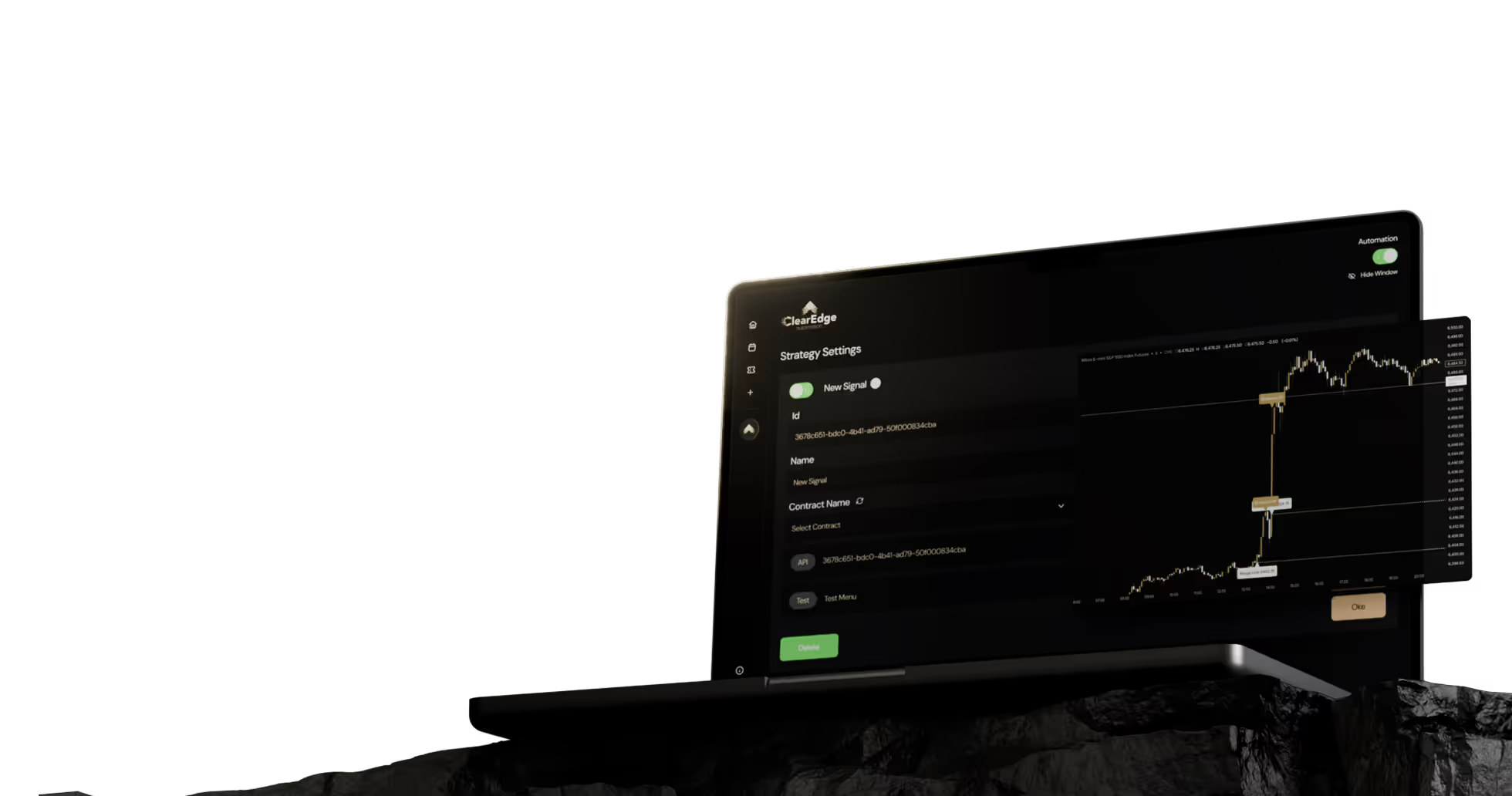
TradingView Automation Platforms For Futures Trading Guide
Master futures execution by converting TradingView alerts into live broker orders. Experience no-code automation with lightning-fast 3-40ms execution speeds.


TradingView-based automation platforms convert TradingView alerts into live broker orders, enabling traders to automate futures execution without coding. These platforms typically operate via webhooks that receive alert data from TradingView charts and transmit trade instructions to supported futures brokers with latencies ranging from 3-40 milliseconds depending on infrastructure and broker connection.
Key Takeaways
- TradingView automation platforms use webhook technology to bridge TradingView alerts and futures broker execution systems
- Execution speeds vary from 3-40ms depending on platform architecture and broker API performance
- Most platforms support 15-20+ futures brokers including TradeStation, NinjaTrader, and AMP Futures
- No-code platforms let traders automate strategies without programming Pine Script or custom APIs
Table of Contents
- What Is TradingView-Based Automation?
- How Webhook Integration Works
- The TradingView Automation Platform Ecosystem
- Execution Infrastructure and Speed
- Broker Compatibility and Integration
- Frequently Asked Questions
- Conclusion
What Is TradingView-Based Automation?
TradingView-based automation platforms are software services that execute futures trades automatically when TradingView alerts fire. These platforms sit between TradingView's charting interface and your futures broker, translating alert signals into actual market orders. Unlike manual trading where you click buttons after seeing an alert, automation platforms receive the alert data via webhook and place the trade in milliseconds.
Webhook: A webhook is an HTTP callback that sends real-time data from one application to another when a triggered event occurs. In TradingView automation, the webhook transmits alert parameters (symbol, direction, quantity) to your automation platform the instant your indicator conditions are met.
The core value proposition addresses execution latency and emotional interference. When a TradingView indicator fires during volatile sessions like NFP announcements (first Friday monthly, 8:30 AM ET), manual execution typically takes 2-5 seconds. Automated execution completes in 3-40 milliseconds depending on your platform and broker connection.
Most platforms require no coding knowledge. You configure your strategy once in TradingView, set up the webhook URL in your alert settings, and the platform handles order routing. This differs from custom API development, which requires Python or JavaScript programming and broker API documentation expertise.
How Webhook Integration Works
Webhook integration follows a four-step process: alert trigger, webhook transmission, platform processing, and broker execution. When your TradingView indicator meets specified conditions, TradingView sends an HTTP POST request containing alert data to your automation platform's webhook URL. The platform parses this data, applies your risk parameters, and transmits the order to your broker via their API.
The webhook message typically includes JSON-formatted data specifying the contract symbol, order direction (long/short), quantity, and optional stop-loss/take-profit levels. A basic ES futures alert webhook might look like:
{"symbol": "ES", "action": "buy", "quantity": 1, "stop": 5650.00, "target": 5670.00}
Platform processing time depends on architecture. Cloud-based platforms introduce 10-30ms latency from webhook receipt to broker transmission. Platforms using direct broker API connections rather than intermediary servers reduce this to 3-15ms. Your broker's API response time adds another 5-20ms depending on their infrastructure and current server load.
API (Application Programming Interface): An API is a set of protocols that allows different software applications to communicate. Futures brokers provide APIs that accept programmatic trade orders rather than requiring manual platform input.
Alert configuration in TradingView requires entering your platform's webhook URL in the alert's "Notifications" tab and formatting the message body according to your platform's syntax requirements. Most no-code platforms provide message templates you copy and customize with your contract specifications and position sizing rules.
The TradingView Automation Platform Ecosystem
The TradingView automation ecosystem includes no-code platforms, semi-custom solutions, and full API development. No-code platforms like ClearEdge Trading, AutoTrader, and TradersPost offer visual interfaces where you configure rules without programming. Semi-custom platforms provide template code you modify. Full API development involves building custom infrastructure using broker APIs and webhook receivers.
No-code platforms typically charge $49-$299 monthly depending on features and account limits. They handle webhook parsing, risk management logic, and broker API integration. You configure position sizing, daily loss limits, and maximum position counts through dashboard controls rather than code.
Platform TypeSetup TimeMonthly CostCoding RequiredNo-Code Platform15-30 minutes$49-$299NoneSemi-Custom2-4 hours$0-$99Basic JavaScript/PythonFull Custom API10-40 hours$0 (infrastructure costs vary)Advanced programming
Platform selection depends on technical capability and customization needs. Traders without programming backgrounds use no-code platforms. Developers seeking specific execution logic or reduced monthly costs build custom solutions. Semi-custom options suit traders comfortable editing template code but not building infrastructure from scratch.
Most platforms support multi-account management, allowing you to route the same TradingView alert to multiple broker accounts or prop firm accounts simultaneously. This matters for traders managing both personal capital and funded accounts with different position sizing requirements.
Execution Infrastructure and Speed
Execution speed in TradingView automation depends on four latency components: TradingView alert generation (1-3ms), webhook transmission (5-15ms), platform processing (3-30ms), and broker API execution (5-20ms). Total latency typically ranges 14-68ms, though most quality platforms achieve 20-40ms under normal conditions.
Server location affects webhook transmission speed. Platforms using cloud infrastructure geographically close to broker data centers reduce transmission latency. A platform hosted in Chicago's data center district executes ES and NQ trades faster than one hosted in Europe, since CME Group's matching engines operate in Aurora, Illinois.
Latency: Latency measures the time delay between an event trigger and system response. In trading automation, latency represents the milliseconds between your indicator condition being met and your order reaching the exchange.
Broker API performance varies significantly. TradeStation's API typically responds in 8-15ms. AMP Futures using Rithmic infrastructure achieves 5-12ms. NinjaTrader connections range 10-20ms depending on configuration. These differences matter during high-volatility events when ES futures can move 5-10 ticks (1.25-2.50 points, $62.50-$125 per contract) in under 100ms.
Some platforms offer direct market access (DMA) routing, which bypasses broker order management systems and sends orders directly to CME Globex. DMA reduces execution time to 3-8ms but requires higher capital minimums and more complex account setup. Most retail futures traders use standard broker API connections rather than DMA.
Broker Compatibility and Integration
TradingView automation platforms support 15-25 futures brokers depending on the platform. Common integrations include TradeStation, NinjaTrader, AMP Futures, TopStep, Tradovate, Interactive Brokers, and TD Ameritrade. Each broker requires different authentication methods and supports different order types.
Integration setup involves generating API credentials from your broker platform and entering them in your automation platform's settings. TradeStation requires an OAuth token. NinjaTrader uses username/password with machine ID verification. AMP Futures connections through Rithmic require separate Rithmic credentials beyond your AMP login.
Broker limitations affect automation capabilities. Some brokers restrict API access to certain account types or minimum balances. Interactive Brokers requires $10,000 minimum for futures API access. TD Ameritrade limits automated futures trading to accounts with approved algorithmic trading permissions. Confirm your broker supports API access before selecting an automation platform.
BrokerAPI LatencyAccount MinimumSpecial RequirementsTradeStation8-15ms$500OAuth approvalAMP Futures5-12ms$400Rithmic credentialsNinjaTrader10-20ms$400Machine ID verificationInteractive Brokers12-18ms$10,000API permissions approval
Order type support varies by broker API. Most brokers support market, limit, stop-market, and stop-limit orders via API. Bracket orders (entry with automatic stop-loss and take-profit) are supported by TradeStation, NinjaTrader, and AMP but not all brokers. Confirm your broker supports the order types your strategy requires before automation setup.
Prop firm compatibility requires additional consideration. TopStep, Earn2Trade, and similar evaluation programs often restrict automated trading during the evaluation phase but allow it after funding. Some firms require disclosure of automation platform use. Check prop firm automation rules specific to your funded account provider.
Frequently Asked Questions
1. Do I need a paid TradingView account to use automation platforms?
No, TradingView's free plan supports webhook alerts, which is the mechanism automation platforms use. However, the free plan limits you to one active alert at a time, while Pro plans ($14.95/month) allow multiple simultaneous alerts needed for managing multiple strategies or instruments.
2. Can I automate strategies using TradingView's built-in indicators without coding?
Yes, you create alerts on any TradingView indicator (built-in or custom) by clicking the alert icon and configuring the webhook notification. The automation platform receives the alert data and executes based on your configured rules, no Pine Script coding required.
3. What happens if my internet connection drops during automated trading?
If your home internet fails, TradingView (cloud-hosted) continues generating alerts and sending webhooks normally since it doesn't depend on your connection. Your automation platform (also cloud-hosted) continues executing trades. Your broker connection remains active unless the platform itself loses connectivity.
4. How do automation platforms handle partial fills on futures contracts?
Most platforms track order status via broker API responses and report partial fills in your dashboard. Some platforms automatically resubmit unfilled quantity; others require you to configure this behavior. For highly liquid contracts like ES and NQ, partial fills are rare during regular trading hours.
5. Can I test automation with paper trading before risking real capital?
Yes, most platforms support broker paper trading accounts (simulated trading environments). TradeStation, NinjaTrader, and Tradovate all offer simulation accounts that work with automation platforms. Test your webhook configuration and execution logic in simulation before connecting live capital.
Conclusion
TradingView-based automation platforms provide accessible futures automation for traders without programming expertise, converting chart alerts into broker orders with 3-40ms execution speeds. Platform selection depends on your broker, technical capability, and customization needs, with no-code options serving most retail traders effectively.
For comprehensive guidance on TradingView alert configuration and webhook syntax, see our complete TradingView automation guide. Paper trade your automation setup for at least 20-30 executions before deploying real capital to verify webhook reliability and order accuracy.
Want to explore platform features and broker compatibility? Read our futures automation platform comparison guide for detailed feature analysis and selection criteria.
References
- CME Group. "E-mini S&P 500 Futures Contract Specs." https://www.cmegroup.com/markets/equities/sp/e-mini-sandp500.html
- TradingView. "About Webhooks in Alerts." https://www.tradingview.com/support/solutions/43000529348-about-webhooks/
- TradeStation. "TradeStation API Documentation." https://tradestation.github.io/api-docs/
- NinjaTrader. "Automated Trading Interface (ATI)." https://ninjatrader.com/support/helpGuides/nt8/automated_trading_interface.htm
Disclaimer: This article is for educational and informational purposes only. It does not constitute trading advice, investment advice, or any recommendation to buy or sell futures contracts. ClearEdge Trading is a software platform that executes trades based on your predefined rules—it does not provide trading signals, strategies, or personalized recommendations.
Risk Warning: Futures trading involves substantial risk of loss and is not suitable for all investors. You could lose more than your initial investment. Past performance of any trading system, methodology, or strategy is not indicative of future results. Before trading futures, you should carefully consider your financial situation and risk tolerance. Only trade with capital you can afford to lose.
CFTC RULE 4.41: Hypothetical or simulated performance results have certain limitations. Unlike an actual performance record, simulated results do not represent actual trading. Also, since the trades have not been executed, the results may have under-or-over compensated for the impact, if any, of certain market factors, such as lack of liquidity.
By: ClearEdge Trading Team | 29+ Years CME Floor Trading Experience | About























































Steal the PlaybooksOther TradersDon’t Share
Every week, we break down real strategies from traders with 100+ years of combined experience, so you can skip the line and trade without emotion.