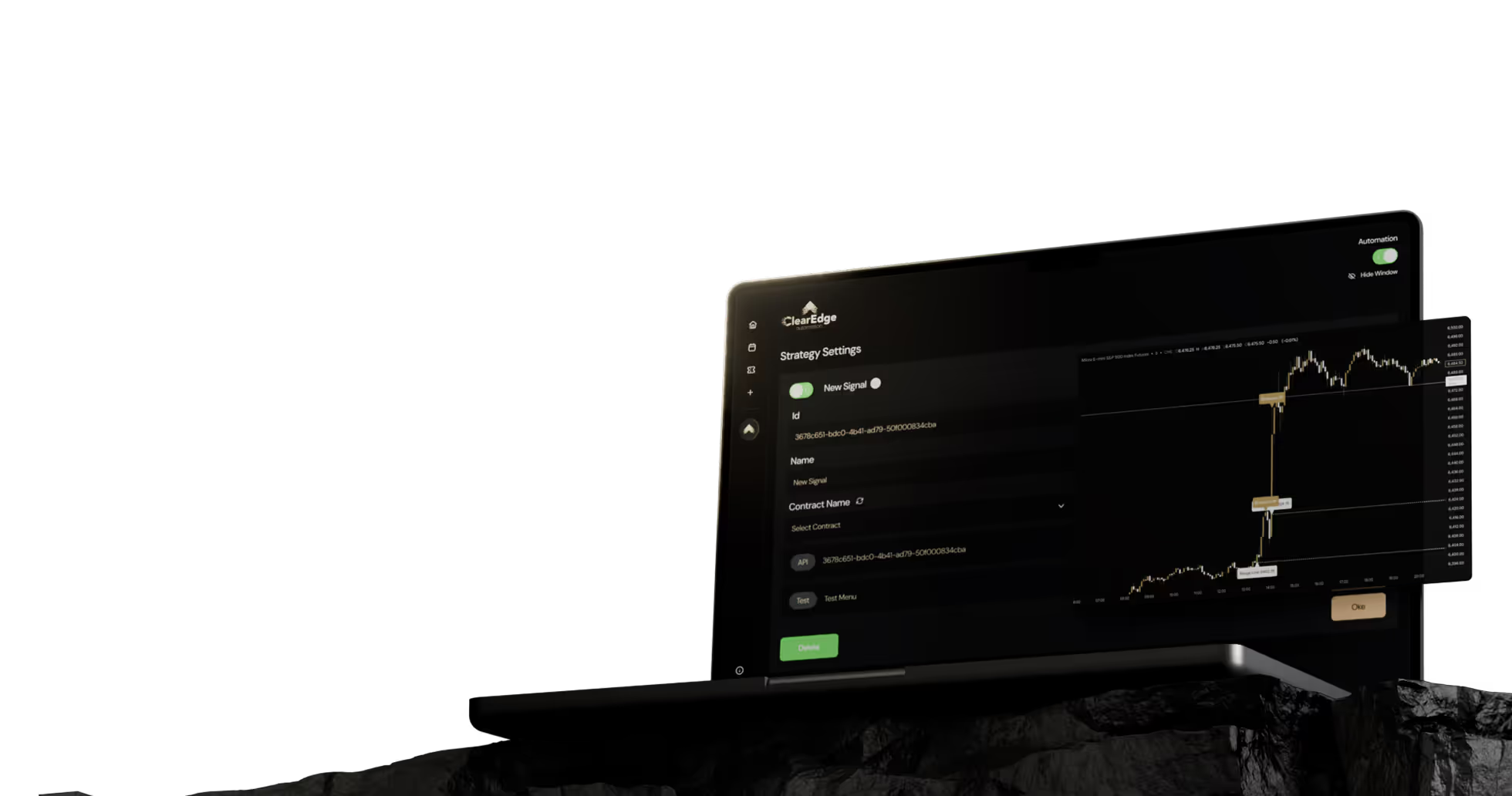
Work Life Balance Trading Automation For Busy Futures Traders
Reclaim your schedule with automated futures trading. Execute systematic strategies while you work or sleep using no-code tools for better work-life balance.


Work life balance trading automation enables traders to execute futures strategies without constant screen time, allowing systematic rule-based trading to run independently during work hours, family time, and sleep. Automation removes the need for manual order placement, letting traders maintain their careers and personal lives while participating in futures markets through predefined TradingView alerts connected to broker execution platforms.
Key Takeaways
- Automation executes trades 24/5 during futures market hours without requiring your presence at the screen
- No-code platforms connect TradingView strategies to broker accounts, eliminating manual order entry
- Pre-set risk parameters and position sizing rules protect accounts while you focus on other priorities
- Systematic execution removes emotional decision-making that occurs when monitoring trades during work or family time
Table of Contents
- What Is Work-Life Balance in Trading Automation
- Time Requirements: Manual vs Automated Trading
- How Automation Enables Work-Life Balance
- Career Compatibility with Futures Trading
- Psychology Benefits of Set-and-Forget Trading
- Setup Considerations for Busy Traders
- Frequently Asked Questions
- Conclusion
What Is Work-Life Balance in Trading Automation
Work-life balance trading automation enables refers to executing futures strategies through systematic rules that operate independently of your active involvement, letting you maintain employment, relationships, and personal wellbeing without sacrificing trading participation. Traditional discretionary trading demands constant chart monitoring, rapid decision-making, and emotional management that conflicts with full-time work schedules and family commitments. Automation shifts this model by converting tested strategies into executable rules that run during market hours whether you're in a meeting, at dinner, or asleep.
The trading psychology automation framework addresses the stress that comes from trying to monitor positions during work obligations. When your strategy operates systematically, there's no need to check charts during presentations or sneak looks at your phone during family events. The system executes according to predefined parameters for entry, exit, position sizing, and risk management.
Systematic Trading: A trading approach based on predefined rules for entries, exits, position sizing, and risk management that executes without discretionary judgment. This removes real-time decision-making requirements and emotional interference.
Futures markets operate nearly 24 hours per day, five days per week. ES futures trade from Sunday 6:00 PM ET through Friday 5:00 PM ET with only a brief daily maintenance break. No individual can monitor these hours while maintaining career and personal commitments. Automation bridges this gap by executing your strategy rules across all trading sessions.
Time Requirements: Manual vs Automated Trading
Manual futures trading typically demands 2-6 hours of active screen time daily for market monitoring, chart analysis, and order execution. Day traders often need to be present during specific high-volume sessions like the 9:30 AM ET equity open or economic data releases at 8:30 AM ET. This schedule directly conflicts with standard employment hours and creates stress around balancing competing priorities.
Trading ApproachDaily Time RequiredSchedule FlexibilityManual discretionary2-6 hours active monitoringMust be present during trading hoursSemi-automated (alerts only)1-3 hours checking alertsNeed phone access during market hoursFully automated15-30 minutes daily reviewReview on your schedule
Automated trading through platforms like ClearEdge Trading reduces active requirements to strategy development, backtesting, and performance review. Initial setup might take 3-5 hours to configure TradingView alerts, webhook connections, and risk parameters. After launch, daily involvement drops to 15-30 minutes reviewing fills, adjusting parameters for changing market conditions, and monitoring account metrics.
Weekend preparation becomes the primary time investment. Traders typically spend 1-2 hours on Saturdays or Sundays reviewing the previous week's performance, adjusting strategy parameters if needed, and preparing for upcoming economic events. This schedule accommodates full-time employment and family commitments far better than intraday monitoring requirements.
How Automation Enables Work-Life Balance
Automation enables work-life balance by executing your predefined strategy rules without requiring your presence or real-time decisions. When your TradingView indicator generates an alert, the webhook sends trade parameters to your automation platform, which submits the order to your broker—all within 3-40 milliseconds depending on connection quality. You don't need to see the alert, approve the trade, or manage the position manually.
Risk management operates systematically through preset parameters. Daily loss limits automatically stop trading if drawdown reaches your threshold, typically 2-5% of account value for conservative approaches. Position sizing calculates automatically based on account balance and risk-per-trade rules. Stop losses and take profits execute according to your strategy specifications without emotional adjustment during the trade.
Webhook: An automated message sent from TradingView to your execution platform when an alert fires, containing trade parameters like direction, quantity, and order type. This creates the connection between strategy signals and actual broker orders.
The TradingView automation guide details webhook configuration for hands-free execution. Once configured, your strategy runs during all market sessions including overnight hours when manual monitoring isn't practical. Opening Range strategies that trade the first 30-60 minutes after the equity open at 9:30 AM ET execute automatically whether you're in a morning meeting or driving to work.
Economic calendar integration helps manage high-volatility events. Traders can configure automation to pause during FOMC announcements at 2:00 PM ET or Non-Farm Payrolls releases at 8:30 AM ET on the first Friday of each month. This prevents unexpected volatility from triggering trades during news events when you might not be available to monitor positions.
Career Compatibility with Futures Trading
Full-time employment and futures trading become compatible when automation handles execution during work hours. The primary challenge with manual trading is the schedule conflict—market volatility peaks during morning hours when most professionals have meetings, calls, and core responsibilities. Automation executes your strategy during these hours without requiring your attention or creating workplace distractions.
Professional obligations that previously prevented trading participation no longer create conflicts. If your strategy triggers an entry at 10:15 AM while you're presenting to clients, the trade executes according to your predefined rules. If an exit signal fires at 2:45 PM during a conference call, the position closes systematically. There's no need to excuse yourself, check your phone, or compromise professional responsibilities.
Career-Trading Balance Advantages
- Maintain stable employment income while building trading skills
- No workplace distractions from chart monitoring or position anxiety
- Test and refine strategies over months without income pressure
- Reduce financial stress by not depending solely on trading profits
Considerations
- Limited ability to adjust strategies in real-time during work hours
- Must trust systematic rules without discretionary override options
- Need reliable internet and platform uptime during work schedule
- Strategy development and review still require dedicated weekend time
The automated futures trading guide covers strategy development approaches for traders with limited time availability. Focus on end-of-day or session-based strategies rather than scalping approaches that require constant monitoring. Swing strategies holding positions for multiple days reduce the need for intraday attention while still participating in futures market opportunities.
Psychology Benefits of Set-and-Forget Trading
Trading psychology improves significantly when systematic execution removes the emotional strain of watching positions during work or family time. The anxiety of checking charts during meetings, the guilt of prioritizing trading over family dinner, and the stress of split attention across competing obligations all diminish when your strategy operates independently. You're not fighting FOMO, revenge trading impulses, or fear-based exits while trying to focus on other priorities.
Emotional trading errors concentrate during periods of divided attention. When monitoring a losing ES position while in a work meeting, traders often exit prematurely due to anxiety or hold too long due to inability to actively manage the trade. Systematic exits based on predefined stop losses and take profits remove these stress-induced mistakes. The trade manages according to your strategy rules developed during calm weekend preparation, not emotional reactions during busy weekdays.
Trading discipline becomes easier to maintain when execution is systematic rather than discretionary. Overtrading frequently occurs when traders are bored, anxious, or seeking excitement during slow work periods. Automated strategies only take trades when specific conditions are met, preventing impulse entries that violate your trading plan. There's no temptation to "just check the charts quickly" or take discretionary trades outside your tested approach.
FOMO (Fear of Missing Out): The anxiety-driven urge to enter trades based on price movement you're watching rather than your strategy signals. Automation eliminates this by only executing predefined entry conditions, not emotional reactions to market action.
The separation between strategy development and execution improves decision quality. When you develop and backtest strategies on weekends without active positions, your analysis is calmer and more objective. When the strategy executes during the week without your involvement, there's no opportunity for emotional interference. This separation reduces the behavioral finance pitfalls that plague discretionary traders who make decisions while emotionally invested in active positions.
Setup Considerations for Busy Traders
Busy traders should prioritize strategy simplicity and robust risk management over complex multi-condition systems that require constant adjustment. Start with straightforward approaches like Opening Range breakouts, session high/low strategies, or trend-following systems based on moving averages. These strategies generate fewer signals and require less monitoring than scalping or complex multi-timeframe approaches.
Work-Life Balance Trading Setup Checklist
- ☐ Choose end-of-day or session-based strategies rather than scalping approaches
- ☐ Set daily loss limits at 2-3% of account value for automatic trading shutdown
- ☐ Configure position sizing to risk 0.5-1% per trade maximum
- ☐ Test webhook connections on demo account before live trading
- ☐ Set up broker and platform monitoring alerts for disconnections
- ☐ Schedule 15 minutes daily for performance review at consistent time
- ☐ Block weekend time for strategy analysis and parameter updates
- ☐ Document your strategy rules completely for consistent execution
Broker selection impacts reliability during work hours when you can't actively monitor. Choose supported brokers with strong API connections and platform stability. Disconnections during market hours can prevent exits from executing, creating unmanaged risk. Consider brokers like TradeStation or AMP Futures that offer robust connectivity for automated trading.
The futures instrument automation guide helps select appropriate contracts based on your schedule. ES and NQ futures offer high liquidity during all sessions, reducing execution risk during overnight or early morning automated trades. GC and CL have specific active hours when spreads tighten, which matters for automation during different global sessions.
Monitoring setup should provide alerts for critical issues without creating constant distractions. Configure alerts for daily loss limit approaches, unusual fill prices indicating possible errors, or platform disconnections. Avoid alerts for every trade execution, which recreates the distraction problem automation solves. Review detailed performance once daily at a scheduled time rather than checking sporadically throughout your workday.
Frequently Asked Questions
1. Can I automate futures trading while working a full-time job?
Yes, automation executes your strategy rules during market hours without requiring your presence or real-time decisions. After initial setup taking 3-5 hours, daily involvement reduces to 15-30 minutes reviewing performance at a time that fits your schedule, typically before work or in the evening.
2. How much time does strategy development require for automated trading?
Initial strategy development and backtesting typically requires 10-20 hours over several weekends to build, test, and refine your approach. After launch, most traders spend 1-2 hours on weekends reviewing performance and adjusting parameters for changing market conditions.
3. What happens if my automation platform disconnects during work hours?
Quality platforms provide monitoring alerts for disconnections via email or SMS so you're aware of issues. Most traders configure broker-level stop losses as backup protection, ensuring positions have risk management even if the automation platform loses connection.
4. Do I need programming knowledge to automate futures trading?
No-code platforms like ClearEdge Trading connect TradingView alerts to broker execution without programming requirements. You configure your strategy in TradingView's visual interface and set up webhooks through platform documentation.
5. How do I manage risk when I can't monitor trades during work?
Preset risk parameters including daily loss limits (typically 2-5% of account), per-trade risk limits (0.5-1% per trade), and maximum position sizes control risk systematically. The platform enforces these limits automatically without requiring your involvement.
6. Can automation handle high-volatility events during work hours?
Configure your automation to pause during scheduled economic releases like FOMC announcements or Non-Farm Payrolls if your strategy isn't designed for high-volatility conditions. Alternatively, test strategies specifically designed for news events that execute and manage positions systematically during volatility.
Conclusion
Work life balance trading automation enables futures market participation without sacrificing career responsibilities, family time, or personal wellbeing by executing systematic strategies independently during all market sessions. Automation reduces active trading time from 2-6 hours daily to 15-30 minutes of performance review, eliminates emotional decision-making during work hours, and enforces disciplined risk management through preset parameters.
Start by developing straightforward strategies on weekends, testing thoroughly on demo accounts, and gradually transitioning to live automation as you build confidence in systematic execution. The goal is sustainable trading that complements your lifestyle rather than dominating it.
Want to explore automation frameworks further? Read our complete trading psychology automation guide for strategies that remove emotional interference and maintain consistency.
References
- CME Group. "E-mini S&P 500 Futures Contract Specs." https://www.cmegroup.com/markets/equities/sp/e-mini-sandp500.html
- TradingView. "Webhook Alert Documentation." https://www.tradingview.com/support/solutions/43000529348
- Futures Industry Association. "2024 Futures Trading Volume Report." https://www.fia.org/
- CFTC. "Automated Trading Risk Management Guidelines." https://www.cftc.gov/
Disclaimer: This article is for educational purposes only. It is not trading advice. ClearEdge Trading executes trades based on your rules—it does not provide signals or recommendations.
Risk Warning: Futures trading involves substantial risk. You could lose more than your initial investment. Past performance does not guarantee future results. Only trade with capital you can afford to lose.
CFTC RULE 4.41: Hypothetical results have limitations and do not represent actual trading. Simulated results may have under-or-over compensated for market factors such as lack of liquidity.
By: ClearEdge Trading Team | About























































Steal the PlaybooksOther TradersDon’t Share
Every week, we break down real strategies from traders with 100+ years of combined experience, so you can skip the line and trade without emotion.